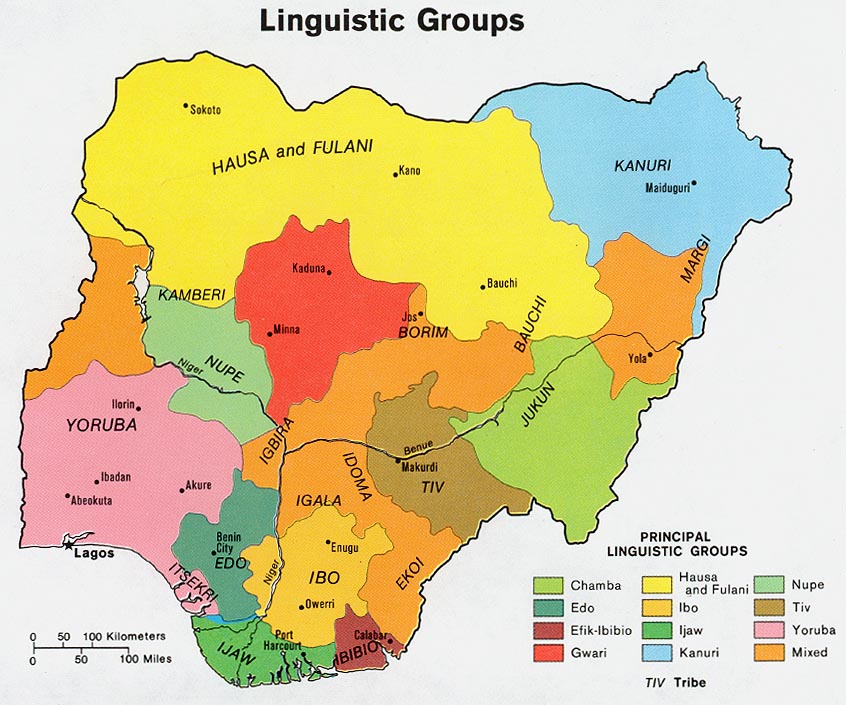
The Ziriya, also known as Jiriya, are a small indigenous people of Kaduna State in Nigeria's Middle Belt region. They speak, or historically spoke, a Kainji language of the Niger-Congo family closely related to Sheni, spoken in villages along the northern fringes of the Jos Plateau in Lere Local Government Area, headquartered at Saminaka. The two communities — Ziriya and Sheni — are geographically adjacent and linguistically very close, with linguistic evidence suggesting they may speak varieties of the same language. The Ziriya village itself lies in the hilly terrain of southern Kaduna, a landscape of savanna, scattered settlements, and farming communities that has been home to dozens of small indigenous peoples for many generations.
The Ziriya are among the many small ethnic communities whose presence in this part of Nigeria stretches back far before the colonial era. The broader region lies within the ancient Nok culture zone, where some of the earliest iron-working and terracotta traditions in sub-Saharan Africa developed over a thousand years before the common era. The Ziriya, alongside their Sheni neighbors, lived through the reorganization of northern Nigeria under the Zaria Emirate and later British colonial administration, during which their community was documented in colonial records as early as 1922.
Today the Ziriya language is critically endangered and may be effectively extinct as a living tongue. The last known speaker with active childhood fluency was documented by a linguist in 1982, and by that time could recall only basic vocabulary. The Ziriya people as a distinct ethnic community have largely assimilated into surrounding Hausa and other communities, though they remain recognized as a distinct people group.
The Ziriya live in the rural hilly terrain of Lere Local Government Area, where subsistence farming has long been the foundation of daily life. Millet, sorghum, maize, and guinea corn are among the staple crops grown in this part of Kaduna State. Small livestock keeping and local trade supplement agricultural income. The broader Lere area is a productive farming zone, and the seasonal rhythms of planting and harvest shape the calendar of community life.
The Ziriya live amid mixed communities of Hausa, Fulani, and other indigenous peoples of southern Kaduna. Hausa serves as the primary language of trade, education, and daily communication across the region. For the Ziriya, the shift away from their mother tongue toward Hausa and other regional languages reflects a long process of cultural assimilation that has occurred across many of the smaller indigenous communities of the Middle Belt. The cultural practices and oral traditions once carried in the Ziriya language have become increasingly difficult to recover or preserve.
As with many rural communities of Nigeria's Middle Belt, traditional cultural practices may continue alongside Christian identity in some households. The need for deep, Scripture-rooted discipleship is always real wherever faith is present and growing toward maturity.
The Ziriya face a profound cultural need alongside their spiritual one. With their language effectively extinct and their distinct communal identity deeply eroded through assimilation, the Ziriya are a people at risk of being forgotten entirely. Whatever can be documented of their language and cultural heritage deserves care and attention, both as a matter of honoring human dignity and as a reflection of the God who knows every people by name.
Spiritually, the most urgent need is for any who identify as Ziriya to have a faith that is personal, deeply rooted in the Word of God, and expressed in transformed lives. A small and marginalized people is not beyond the love of Christ. They are known to God, and the prayer of the wider church is that they would know him in return.
Pray that God, who knows every people and calls them by name, would make himself known among the Ziriya in a clear and personal way, and that their identity would be fully secured in him.
Pray for any believers among the Ziriya, that their faith would be genuine and growing, grounded in the Scriptures, and expressed in lives that clearly reflect the love and grace of Jesus Christ.
Pray for Ziriya families, that parents would pass a living faith to their children, and that the knowledge of God would anchor their identity even as so much of their cultural heritage has been lost.
Pray that any Ziriya believers would develop a vision to carry the gospel to others — to the unreached peoples of Africa who have not yet heard the name of Jesus Christ.
Scripture Prayers for the Ziriya in Nigeria.
https://en.wikipedia.org/wiki/ISO_639:zir
https://glottolog.org/resource/languoid/id/ziri1239
https://www.ethnologue.com/language/zir/
http://www.language-archives.org/language/zir
https://grokipedia.com/page/sheni_ziriya_language
https://en.wikipedia.org/wiki/Kainji_languages
https://en.wikipedia.org/wiki/Southern_Kaduna
https://en.wikipedia.org/wiki/Nok_culture
| Profile Source: Joshua Project |