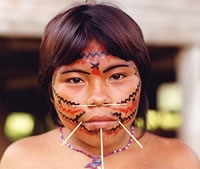

The Yanomamo people are indigenous to the Amazon rainforest, primarily residing in southern Venezuela and northern Brazil. They speak the Yanomamo language, which belongs to the Yanomaman language family and includes several dialects. Historically, the Yanomamo lived in isolation from the outside world, maintaining a distinct cultural and linguistic identity.
Their first sustained contact with outsiders began in the mid-20th century through government posts and missionary efforts. Despite these interactions, many Yanomamo communities continue to live in remote areas, preserving traditional ways of life passed down for generations.
The Yanomamo live in communal dwellings called shabonos, which are large circular structures made from natural materials such as vines, leaves, and wood. These dwellings house multiple families and foster a strong sense of community. Their subsistence lifestyle is based on horticulture, hunting, and gathering. They cultivate crops like plantains, cassava, and bananas, and supplement their diet with wild fruits, nuts, and game.
Social life is communal, with decisions made collectively and daily activities often centered around food preparation, craft-making, and ritual practices. Their remote environment has helped shield them from some external influences, but illegal mining and deforestation continue to threaten their land and way of life.
The Yanomamo practice an animistic religion that is deeply intertwined with their natural surroundings. They believe in a complex spiritual world inhabited by spirits called "hekura," which can influence health, weather, and fortune. Shamans play a central role in their spiritual life, using hallucinogenic snuff to communicate with these spirits and perform healing rituals. Their cosmology includes multiple layers of the universe, and they view death and illness as spiritual events often caused by malevolent forces. While some exposure to Christianity has occurred through missionary work, traditional beliefs remain dominant in most communities.
Access to healthcare is extremely limited in Yanomamo territories, leaving communities vulnerable to preventable diseases and malnutrition. Educational opportunities are scarce, and most children do not receive formal schooling, which hinders their ability to engage with the broader society while preserving their own culture. Legal protection of their land is inconsistent, and incursions by miners and loggers continue to pose serious threats to their environment and autonomy.
Pray that the Yanomamo people would encounter the gospel in ways that honor their cultural identity and speak to their spiritual hunger.
Ask God to raise up indigenous believers and leaders who can share the message of Christ with wisdom and compassion.
Pray for the protection of their land and resources, and for healing from the physical and spiritual harm caused by outside exploitation.
Lift up missionaries and organizations working among the Yanomamo, that they would be guided by love, humility, and cultural sensitivity.
Scripture Prayers for the Yanomamo in Brazil.
Yanomami Foundation
Britannica: Yanomami
| Profile Source: Joshua Project |