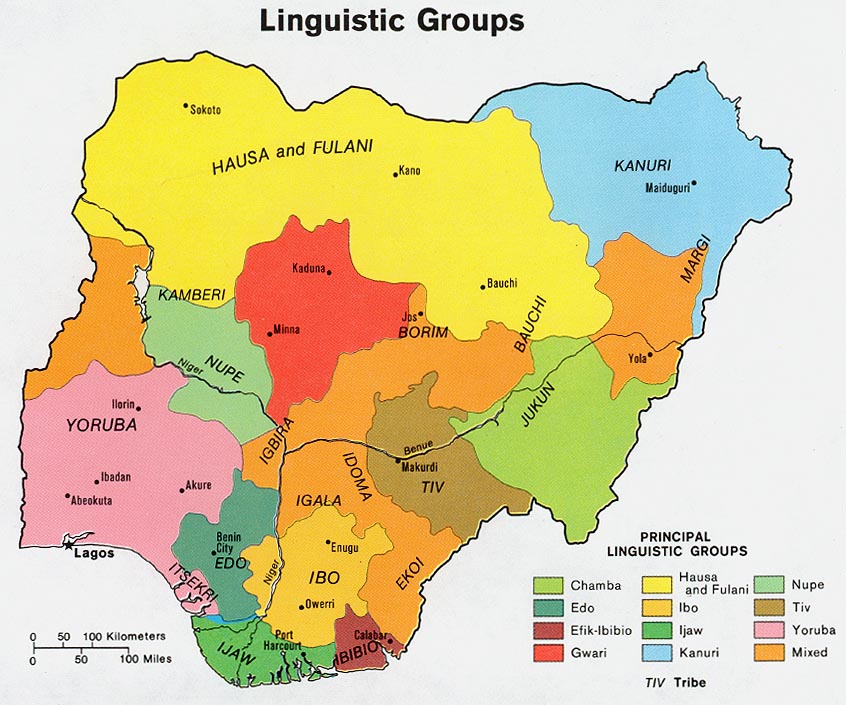

The Yangdang Waka are an indigenous people group living in the Numan and Demsa Local Government Areas of Adamawa State in northeastern Nigeria. Their homeland sits in the upper Benue River valley, a fertile stretch of savanna and floodplain flanked by distant highlands, where the Benue and Gongola Rivers have sustained farming and fishing communities for centuries. The Yangdang are part of the broader Yendang language cluster — a group of closely related Adamawa languages that includes Waka, Yendang proper, and Yoti — and their primary language is listed as Waka, an Adamawa branch language of the Niger-Congo family. The Waka language is considered vigorous, with active intergenerational transmission, and its script has been documented in published form. Bible portions have been produced in Waka, and the New Testament is accessible in audio form through Faith Comes By Hearing, meaningful provisions for a largely oral community. The area that encompasses their homeland was historically drawn into the Adamawa Emirate — a vast territory established in 1809 under the Fulani leader Modibbo Adama as part of the Sokoto Caliphate. That political history brought Islam into contact with the smaller ethnic communities of the Benue valley, including peoples like the Yangdang Waka. During the colonial period, Dutch missionaries founded the Lutheran Church of Christ in Nigeria (LCCN) at Numan in 1913, bringing the first sustained Christian witness to the region surrounding the Yangdang Waka homeland.
The Yangdang Waka are primarily subsistence farmers who cultivate the fertile soils of the Benue valley. Guinea corn (sorghum), millet, groundnuts, cassava, yams, maize, and cotton are the principal crops, while dry-season vegetable farming — growing tomatoes, onions, peppers, and leafy greens using irrigation near the rivers — provides both household nutrition and market income. Fishing in the Benue River and its tributaries is an important secondary livelihood, and livestock, particularly cattle and goats, represent both wealth and social capital within the community. Local cottage industries such as mat weaving, pottery, and calabash decoration supplement household economies and are passed down as craft traditions.
Family and community life is organized around kinship networks and local chiefly authority, with traditional leaders mediating social disputes and presiding over communal ceremonies. Marriage is a celebrated community event involving family negotiations, exchanges of gifts or bridewealth, and festive gatherings marked by traditional music and dance. The harvest season brings communal celebration as families and neighbors gather to give thanks for the land's provision. Adamawa State's security situation — shaped by Boko Haram insurgency activity in the broader northeastern region and by farmer-herder conflicts — casts a long shadow over rural communities like those of the Yangdang Waka, bringing displacement, loss, and disruption to agricultural life.
Traditional ethnic religion remains the dominant spiritual framework among the Yangdang Waka. This worldview understands the natural world — the land, the rivers, and the seasons — as inhabited by spiritual forces that must be acknowledged and appeased through ritual. Ancestor veneration, the use of sacred objects, and consultation of traditional spiritual specialists play a role in daily life decisions, particularly around farming, illness, and important family transitions.
A meaningful minority of the Yangdang Waka identify as Christians, shaped in part by the long LCCN Lutheran missionary presence in the Numan area and the availability of gospel audio materials in the Waka language.
A smaller portion of the community practices Islam, the faith introduced through the historic influence of the Adamawa Emirate. The community stands at a genuine crossroads spiritually — the majority have not yet placed their trust in Jesus Christ, who died and rose again as the only mediator between God and humanity and the one in whom every spiritual hunger finds its true answer.
Reliable access to healthcare, clean water, and quality education is limited in many rural communities of Numan and Demsa LGAs, and the Yangdang Waka share these practical gaps with their neighbors. The ongoing security threat from insurgency activity and farmer-herder conflicts in Adamawa State creates instability that disrupts farming cycles, displaces families, and leaves communities in grief and uncertainty. A complete New Testament or full Bible in the written Waka language would be a transformative resource for the Yangdang Waka church, and the believers who already exist need pastoral support and deeper discipleship to grow in their faith. Those still following the way of traditional religion need patient, culturally intelligent evangelists who will live among them with the love of Christ and the truth of the gospel.
Pray that the Waka-language audio New Testament would find its way into Yangdang Waka homes and hearts, and that the Holy Spirit would use it to draw many to saving faith in Jesus Christ.
Ask God to raise up and strengthen the small community of Yangdang Waka believers, providing them with sound biblical teaching and a growing confidence to share the gospel with their own people.
Pray for protection, peace, and physical provision for Yangdang Waka families facing insecurity, displacement, and the everyday hardships of rural life in northeastern Nigeria.
May the Yangdang Waka church grow in maturity and vision, and may God call workers from among its members to carry the gospel to the many unreached peoples of the surrounding region who have not yet heard the name of Jesus.
Scripture Prayers for the Yangdang Waka in Nigeria.
https://en.wikipedia.org/wiki/Yendang_languages
https://en.wikipedia.org/wiki/Adamawa_State
https://www.britannica.com/place/Adamawa-state-Nigeria
https://zodml.org/discover-nigeria/states/adamawa-state
https://adamawastate.gov.ng/history/
https://live.bible.is/bible/WAVNBT
https://www.wikidata.org/wiki/Q3913394
| Profile Source: Joshua Project |