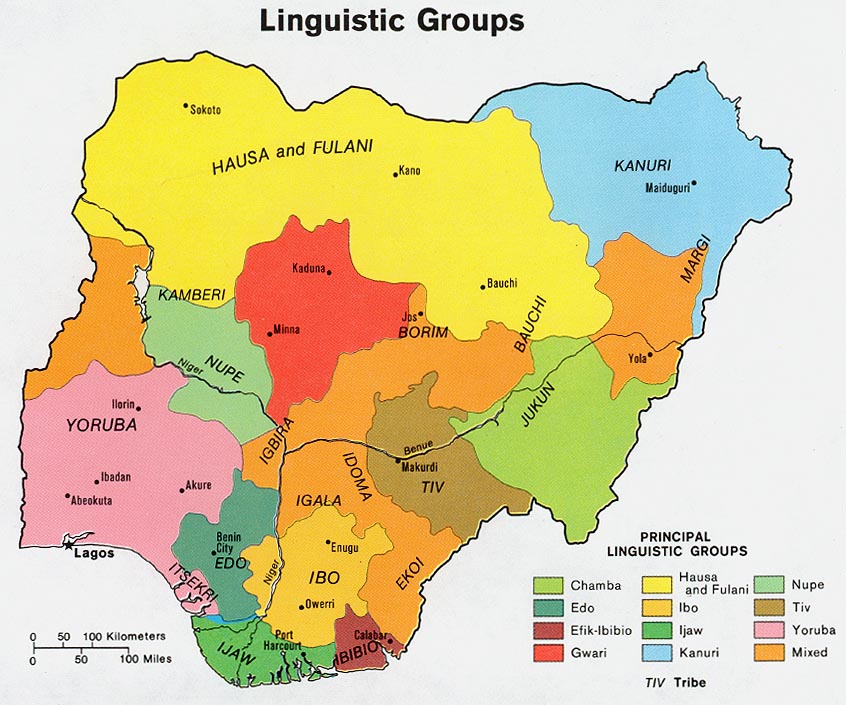
The Oruma are a small people group living in the Niger Delta region of southern Nigeria, most likely in Bayelsa State, which lies at the heart of this vast riverine landscape. They belong to the broader Ijaw (also called Izon or Ijo) people cluster, one of the oldest and most historically rooted ethnic families in West Africa. The Ijaw trace their ancestry to an ancient people known as the Oru, believed to have migrated into the Lower Niger and Niger Delta region from the interior of Africa long before recorded history. Some scholars suggest initial settlement in the delta may reach back as far as 500 BC. Like their Ijaw kinspeople, the Oruma have long been shaped by the rivers, creeks, and mangrove forests that define their homeland. Their primary language is Oruma, one of three small Inland Ijaw languages recognized by linguists, and notably distinct enough from other Inland Ijaw varieties that it is not fully intelligible with them. This linguistic uniqueness marks the Oruma as a community with their own cultural identity within the larger Ijaw world. The arrival of Christian missionaries in the Niger Delta during the colonial era had a significant and lasting influence on the Oruma, as it did on many Ijaw groups, shaping the spiritual landscape they inhabit today.
Daily life for the Oruma is intimately connected to the water. Fishing remains one of the central economic activities, as it has been for Ijaw communities for generations. The rivers and creeks provide both food and a means of livelihood, with fish often smoked and dried for local consumption and trade. Farming also plays an important role, with households cultivating crops such as yams, cassava, plantains, cocoyams, rice, and bananas, along with tropical fruits including mangoes and guava. Palm oil and palm kernel production contribute to the local economy as well. Family life in Ijaw communities, including among the Oruma, is structured around extended kinship networks. Two forms of marriage are recognized — one in which children are affiliated with the mother's lineage, and another, less common arrangement, in which children belong to the father's family. Community leadership tends to be organized around clan heads and chiefs who serve as arbiters of social order. In dress, everyday clothing reflects a practical adaptation to a tropical climate, while ceremonial occasions call for distinctive wrappers, beaded jewelry, and head coverings that mark community identity. Funerals and community celebrations are significant social events that reinforce bonds among the living and honor those who have passed. Despite sitting atop one of the most oil-rich territories on earth, the Oruma and their Ijaw neighbors continue to experience deep poverty, as decades of petroleum extraction have enriched national and corporate coffers while leaving local communities with pollution, environmental degradation, and insufficient infrastructure.
The Oruma are primarily Protestant Christians, a faith tradition that took root among the Ijaw peoples through mission activity during the colonial era. Churches — particularly Anglican and other Protestant congregations — have become a central feature of community life across the Niger Delta, and the Oruma community reflects this heritage. Attendance at Sunday worship services is common, and references to God and Scripture are woven into the fabric of daily speech and social interaction.
That said, traditional Ijaw spiritual beliefs have not entirely disappeared from the cultural landscape. Indigenous worldviews that emphasize the power of water spirits, ancestor veneration, and the importance of spiritual forces in everyday life persist alongside Christian faith in many Niger Delta communities. For some, these beliefs exist in tension with their Christian profession; for others, they blur together in syncretistic practice. The challenge for the Oruma church is to move toward a faith that is robustly grounded in scripture and that equips believers to identify and reject spiritual practices incompatible with the gospel of Jesus Christ.
The Oruma face serious physical challenges rooted in their environmental and economic context. Clean water, adequate healthcare, and reliable infrastructure remain pressing needs in many riverine Bayelsa communities, where roads are scarce and access to services often depends on boat travel. The Niger Delta's oil industry has brought environmental devastation — oil spills contaminate farmland and fishing waters, threatening both health and food security for communities like the Oruma. Reliable access to quality education would equip younger generations to participate more fully in Nigeria's broader economy.
Spiritually, while the Oruma community has a Protestant Christian presence, there is a need for disciples who are deeply formed in God's Word and equipped to distinguish biblical faith from syncretistic blends with traditional spirituality. Strong, biblically faithful local churches would serve as the backbone of both spiritual health and community flourishing. The Oruma are not a people without a witness — they have received the gospel. The greater calling now is for the Oruma church to grow in maturity, to become a community of Spirit-filled, Scripture-saturated believers, and ultimately to send workers across cultural and linguistic boundaries to the many ethnic groups in Nigeria and beyond who have yet to hear the name of Jesus Christ.
May God raise up teachers and pastors in Oruma churches who are faithfully grounded in the whole counsel of Scripture, leading their congregations into deeper knowledge of the risen Christ.
Pray that the influence of syncretistic spiritual practices would diminish as believers grow in their understanding of the gospel and the sufficiency of Christ.
Ask God to provide the Oruma community with access to clean water, adequate medical care, and educational opportunities — blessings that reflect the shalom God desires for all peoples.
Pray for protection from the ongoing environmental harms caused by oil extraction in the Niger Delta, and for justice for communities whose lands and waters have been damaged by corporate neglect.
Pray that Oruma believers would catch a vision for the unreached peoples of their own nation and continent, becoming active participants in the global discipleship force that is carrying the gospel to those who have never heard.
May the Lord of the harvest call out workers from among the Oruma to join in the great task of making disciples of all nations, that every tribe and tongue might one day stand before the throne of the Lamb.
Scripture Prayers for the Oruma in Nigeria.
https://www.peoplegroups.org/explore/GroupDetails.aspx-peid=14073
https://en.wikipedia.org/wiki/ISO_639:orr
https://en.wikipedia.org/wiki/Ijaw_people
https://en.wikipedia.org/wiki/Bayelsa_State
https://www.ijawworldstudies.com/ijaw-ijo-historical-documentation-brief-history-of-the-ijo-people/
https://sdgs.scout.org/post/showcasing-ijaw-culture-and-people-bayelsa-south-south-nigeria-courtesy-scout-association
https://www.101lasttribes.com/tribes/ijaw.html
| Profile Source: Joshua Project |