


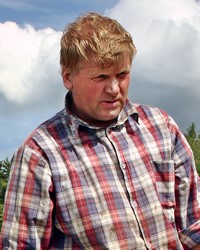

The Livvikovian Olonetsians, often called Olonets Karelians, are a sub-group of the broader Karelian people whose traditional homeland lies between Lakes Ladoga and Onega in what is now the Republic of Karelia. Their self-designation, livvi or livgilaizet, reflects a strong sense of local identity. Their distinct Livvi-Karelian speech variety developed within the Karelian branch of the Finnic languages. They historically lived in the Olonets region and maintained their own cultural patterns even when under the shifting control of regional powers. Before World War II, Livvi-Karelian was spoken in both Russia and Finland, but wartime border changes displaced many families, leading to resettlement in Finland.
Today, the communities remain culturally connected to their ancestral homeland, even though most areas where Livvi-Karelian is still spoken as a community language are found in Russia.
Livvikovian Olonetsians work in agriculture, cattle-breeding, and fishing, practices long established across Karelia. Their close relationship with forests, rivers, and lakes shapes their daily activities, seasonal rhythms, and practical knowledge of the land. Household life is often intergenerational, reflecting long-standing patterns of cooperation among family members.
Meals commonly draw on local produce, fish, and preserved foods suited to the northern environment. In cultural life, traditional celebrations include village festivals tied to the Christian calendar and special community observances in honor of patron saints. Storytelling, epic poetry, and expressive arts remain important features of Karelian cultural expression.
By the Middle Ages, the Karelians—including the Olonets groups—had embraced Eastern Orthodox Christianity, which remains the primary historical religious influence among them. In Finland, some became Lutheran, while others today may not follow any formal religious tradition. Alongside Christian practice, older beliefs persisted well into the twentieth century, including guardian-spirit traditions, nature-related customs, and rituals oriented toward honoring the dead. These older practices blended over time with Christian observances, shaping local expressions of faith. Traditional ceremonies such as pruazniekka, celebrating a village's patron saint, and funeral lament traditions continued to appear in some communities in the past.
Like many minority communities, Livvikovian Olonetsians face ongoing cultural and linguistic pressures. Their language is considered endangered, and younger generations often do not acquire it in the home. They would benefit from meaningful opportunities for language transmission, local economic stability, and community development in both rural Russian districts and scattered communities in Finland. Spiritually, they need renewed access to Scripture in heart-language forms and vibrant fellowships that nurture discipleship. For those who already follow Christ, encouragement and equipping are needed so they may share their faith across cultural and community lines.
Pray for long-term sustainability of their language and cultural heritage.
Pray for economic stability and healthy family life in their rural communities.
Pray for spiritual renewal and access to clear, life-giving scripture in their heart language.
Pray that believers among them will lovingly share their faith with those who remain gospel-starved.
Scripture Prayers for the Olonetsian, Livvikovian in Finland.
https://en.wikipedia.org/wiki/Livvi-Karelian_language
https://www.everyculture.com/Russia-Eurasia-China/Karelians-Religion-and-Expressive-Culture.html
https://heninen.net/korela/english.htm
https://www.wikiwand.com/en/articles/Olonetsian_language
| Profile Source: Joshua Project |


