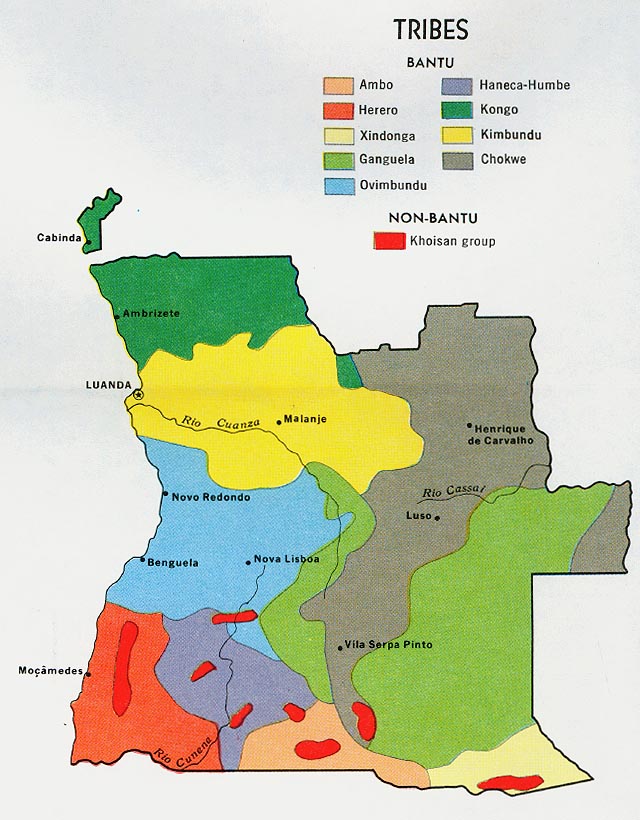
Nyengo Simaa people are part of the broader Simaa-Makoma ethnic group, which is distributed across Angola and Zambia. In Angola, they are primarily located in the southeastern province of Cuando Cubango. Their primary language is Nyengo, a Bantu language. Nyengo is closely related to other Simaa dialects, including Imilangu, Liyuwa, Mulonga, Mwenyi, and Makoma.
Historically, they have been semi-nomadic, relying on agriculture, hunting, and fishing for their livelihoods. Over time, they have established more permanent settlements, integrating with neighboring ethnic groups and participating in regional trade networks. Despite external influences, they have maintained a distinct cultural identity, preserving their language and traditions.
The Nyengo Simaa people traditionally engage in subsistence farming, cultivating crops such as cassava, maize, and beans. They also raise livestock, including cattle and goats, which are vital for their social and economic activities. Fishing and hunting remain important aspects of their livelihood, particularly in communities near rivers and forests.
Social organization is centered around extended families and clans, with elders holding significant authority in decision-making processes. Community events, including ceremonies, festivals, and rituals, play a crucial role in reinforcing social bonds and cultural identity. While many Nyengo Simaa people have adopted some aspects of modern life, they continue to uphold traditional practices and values.
Nyengo Simaa people predominantly practice ethnic religions, characterized by animistic beliefs and ancestor worship. They believe in a spiritual world inhabited by various deities and ancestral spirits, who influence daily life and natural phenomena. Rituals and ceremonies are conducted to honor these spirits, seek guidance, and ensure harmony within the community.
Christianity has been introduced to some Nyengo Simaa communities through missionary efforts. However, the integration of Christian teachings with traditional beliefs has led to a syncretic religious landscape. Many individuals continue to observe traditional rituals alongside Christian practices, reflecting a blending of spiritual beliefs.
The Nyengo Simaa people face several challenges that impact their quality of life. Access to healthcare is limited, with many communities lacking adequate medical facilities and trained personnel. This results in high rates of preventable diseases and mortality.
Educational opportunities are scarce, particularly in rural areas, hindering the development of the younger generation. Schools are often under-resourced, and there is a shortage of qualified teachers.
Infrastructure development is needed to improve transportation, access to clean water, and electricity. Many communities still rely on traditional methods for water collection, which can be time-consuming and unsafe.
Spiritually, while some Nyengo Simaa individuals have been introduced to Christianity, there is a need for deeper discipleship and a more comprehensive understanding of the gospel. The availability of the Bible and other Christian resources in the Nyengo language is minimal, making it difficult for the community to engage with Scripture in their heart language.
May God raise up local leaders who are firmly grounded in His Word to shepherd their communities with wisdom and compassion.
Pray for many to be discipled and thrust out to those without a gospel witness.
May their hearts grow spiritually, moving beyond syncretism to fully embrace the truth and beauty of Christ.
Pray for culturally relevant evangelistic music.
Scripture Prayers for the Simaa, Nyengo in Angola.
Wikipedia. "Nyengo language." Accessed October 2025. https://en.wikipedia.org/wiki/Nyengo_language
Global Recordings Network. "Simaa: Nyengo language." Accessed October 2025. https://globalrecordings.net/en/language/16714
FamilySearch. "Angola L
| Profile Source: Joshua Project |