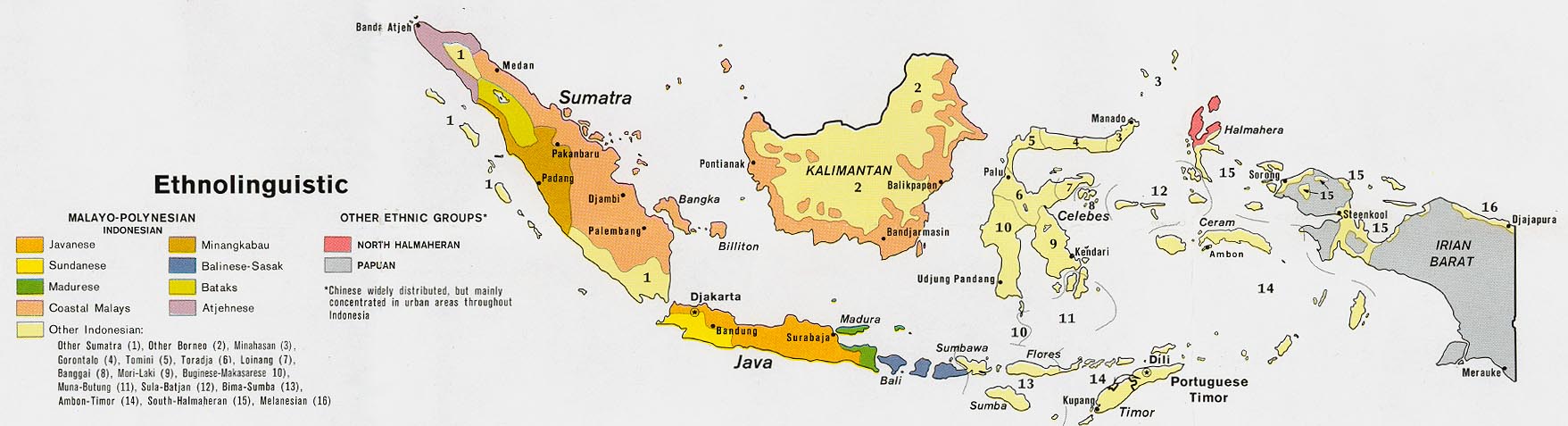
The Nage (often called Nagé?Keo) are an indigenous people of central Flores in East Nusa Tenggara province, Indonesia, especially within what is now Nagekeo Regency. Their language, called Nage belongs to the Central–Malayo-Polynesian branch of the Austronesian family.
Historically, the Nage trace their roots in clan-based social structures tied to particular plant totems, especially the tamarind tree, which undergirds their traditional identity.
Life in Nage territory was long shaped by subsistence agriculture, shifting cultivation, and communal land practices, with large extended households living in hillside settlements.
European contact and missionary activity reached Flores over centuries, and by the 20th century Christian influence was well established. A significant portion of the Nage profess Christianity.
Their traditional beliefs and structures, however, continue to persist alongside Christian faith, reflecting a layered cultural heritage.
Most Nage people live in rural villages on the slopes of volcanoes, in the rugged interior of Flores, often in stone-walled settlements.
Wikipedia
Their economy is largely agrarian. They practice dry-field horticulture, growing tubers, corn, and rice, and supplement this with some hunting, gathering, and occasional irrigation where terrain permits.
Family life centers on large, multi-generational households. Multiple families may live in connected longhouses built in rectangular layouts, and their social identity is organized through lineages or "clans" often associated with totemic plant species.
Men and women have clearly defined roles, although clan relationships often regulate obligations, marriage, food-sharing, and ritual.
Celebrations among the Nage frequently mark the agricultural calendar and life milestones. Planting and harvest seasons are accompanied by rituals that affirm clan ties and call for spiritual blessing over the land. Ethnographic research describes ceremonies of purity, cleansing, and offerings to ancestral spirits as vital to community well?being.
In terms of diet, the Nage rely heavily on plant foods: tubers, groats, and vegetables seasoned with local spices dominate daily meals, and meat (such as pork or goat) is typically reserved for festive occasions.
Their clothing in more traditional contexts may include simple loincloths or kain (woven cloth), although modern Indonesian-style clothing is increasingly common.
The Nage worldview is complex, blending Christian faith with traditional beliefs about spirits, purity, and natural order. Scholars such as Gregory Forth document how the Nage classify living beings—including animals, plants, and even mythical beings—in symbolic systems that reflect spiritual relationships to their environment.
ethnobiology.org
Their cosmology includes a strong sense of duality and balance (e.g., inside/outside, sky/earth), and they believe in guardian spirits (sometimes called naga on Flores) who oversee land, trees, and households.
In Christian contexts, many Nage are nominally Christian, and according to the Joshua Project a large majority identify as Christian adherents.
However, only a small portion are considered evangelical, and the depth of biblical discipleship varies widely. Traditional ritual practices—such as cleansing rites, ancestor veneration, and taboos on certain trees—continue to influence daily life and belief.
The Nage also have stories of the "ebu gogo," ancient beings described in folklore as small, hairy hominoid-looking creatures. Some anthropologists suggest these tales may have layered meaning: spiritual, mythic, and perhaps echoing ancient memory.
Although many Nage people identify as Christians, the level of spiritual maturity and discipleship is uneven. local believers could greatly benefit from sustained, Christ?centered teaching that helps them integrate their faith deeply into community life. Economic opportunities remain limited in the interior highland regions, and the Nage could be strengthened by development initiatives that support sustainable agriculture, health services, and education, enabling families to flourish. Their traditional ecological knowledge—such as classification of plants, animals, and soils—is richly developed, yet the younger generation risks losing this wisdom unless it is preserved and respected in culturally appropriate ways. Furthermore, many Nage lack sufficient pastoral care and Christian workers who are both culturally sensitive and mission-minded; without such workers, there is a risk that the Nage churches will plateau rather than send out disciples and multiply.
Pray that Jesus Christ will continue to draw the Nage people into a living, transformative relationship with Him, so that faith becomes more than a heritage and grows into vibrant discipleship.
Ask God to raise up workers, missionaries, and pastors who are willing to serve among the Nage for the long term, learning their language and culture, sharing the good news, and making disciples.
Intercede for holistic development: pray that God would provide resources and opportunities for education, improved healthcare, and sustainable agriculture in Nage communities, especially in remote, highland villages.
Pray for the younger generation to value and preserve their traditional ecological knowledge, such as their detailed plant and animal classification systems, in ways that honor their heritage and glorify Christ.
Lift up Nage clan leaders and spiritual elders; pray that key influencers would embrace Christ and lead their communities toward unity in him.
Scripture Prayers for the Nage in Indonesia.
Forth, Ethnozoological Classification and Other Writings on the Nage of Flores (Jo?Ethnobiol 1995).
Gregory Forth, Human beings and other people: Classification of human groups and categories among the Nage of Flores.
Forth, "Ambiguous Birds: Id
| Profile Source: Joshua Project |