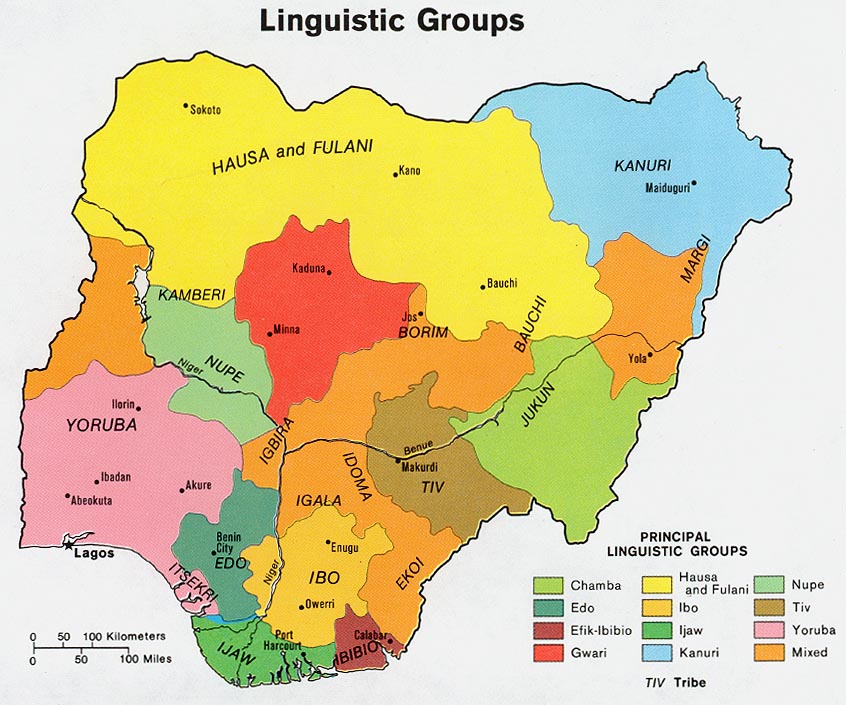
The Kanufi — also known as the Karshi, Anib, or Aninib — are an indigenous people of north-central Nigeria whose language, Kanufi, belongs to the Western Plateau subgroup of the Benue-Congo branch of Niger-Congo. This places them within the broader family of Plateau peoples who have inhabited the highland zones of central Nigeria for generations — distinct from the larger Hausa, Fulani, and Kanuri peoples who surround them. Kaduna State, where the Kanufi are listed among more than sixty distinct ethnic communities, is one of Nigeria's most linguistically diverse states.
Like many Plateau peoples, the Kanufi historically maintained their identity in a highland homeland that offered some protection from the slave raids and political pressures that reshaped northern Nigeria during the Fulani jihads of the nineteenth century. British colonial administration reorganized political life across the region, and Kaduna State itself was established in 1967. Through these upheavals, the Kanufi have preserved a distinct communal identity carried in their language and their connection to ancestral land. Hausa functions as the dominant language for trade and government across the region, and most Kanufi are functionally bilingual. The Kanufi language itself has no formal school presence and has not been developed institutionally, making the home and community the primary space where it is sustained.
The Kanufi live primarily in small rural communities within the savanna landscape of north-central Nigeria. Subsistence agriculture is the foundation of daily life, with millet, sorghum, maize, and groundnuts grown for household use. Livestock keeping — cattle, goats, and poultry — supplements the farming economy. Local markets connect Kanufi villages to the wider regional economy, and Hausa serves as the common language of commerce.
Family life follows patrilineal kinship lines. Elders hold authority in community decisions, and extended household networks provide the framework for mutual aid, dispute resolution, and the transmission of cultural knowledge. Communal celebrations mark the seasons, births, marriages, and the remembrance of ancestors, bringing families together through shared meals, music, and ceremony. Life in Kaduna State has been marked by security challenges in recent years, and rural communities have felt the disruption of banditry and communal tensions that have affected the region.
Traditional ethnic religion is the primary spiritual framework of the Kanufi. Their worldview is shaped by belief in ancestral spirits, the spiritual significance of the natural world, and ritual practices that maintain the community's relationship with the forces governing daily life. These beliefs have governed Kanufi community life for generations and are expressed in ceremonies, sacred sites, and the work of traditional ritual specialists.
A small but genuine community of Christians has taken root among the Kanufi — men and women who have placed their trust in Jesus Christ. This is meaningful, and the Lord is at work. Yet the great majority of the Kanufi remain outside the reach of the gospel, practicing the religion they have inherited. Workers willing to live among the Kanufi, learn their language, and open the Scriptures to them represent the most urgent gospel need. Scripture is available in languages the Kanufi understand, but access in their heart language would deepen and accelerate faith.
The Kanufi's deepest need is access to the good news of Jesus Christ communicated in ways that connect with their language and daily lives. Faithful workers committed to long-term relationship with this community are essential, as are opportunities for new Kanufi believers to be discipled and for local leaders to be trained in the Scriptures. A church planted within the Kanufi community would give believers a home in which to grow and become a witness to those around them.
Practically, quality education is limited in rural Kanufi communities, and the language has no literary tradition or school presence to strengthen literacy and cultural continuity. Healthcare access in Kaduna State's rural areas is uneven, and the security pressures of the broader region create hardship that holistic Christian ministry can help address. Meeting real needs alongside gospel proclamation will show that Christ's love is for the whole person and the whole community.
Pray for the small community of Kanufi believers, that they would be strengthened, discipled in the word, and used by the Holy Spirit as witnesses to their own families, neighbors, and even the Muslim peoples of Nigeria.
Pray for the Lord to protect them and guide them in ways that will draw them to Christ.
Pray for the safety and stability of Kanufi communities in a challenging security environment, and for Christian workers to bring both practical help and the hope of Christ into their villages.
Scripture Prayers for the Kanufi, Karshi in Nigeria.
https://www.ethnologue.com/language/kni/
https://www.nigeriagalleria.com/Nigeria/States_Nigeria/Kaduna/Brief-History-of-Kaduna-State.html
https://en.wikipedia.org/wiki/Kaduna_State
https://www.peoplegroups.org/explore/GroupDetails.aspx-peid=12505
https://en.wikipedia.org/wiki/Plateau_languages
https://www.britannica.com/place/Nigeria
| Profile Source: Joshua Project |