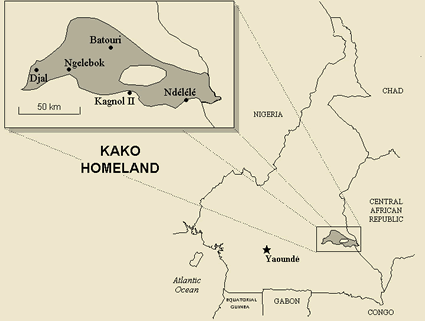

The Kako are a Bantu-speaking people of eastern Cameroon. Their traditional homeland is around the Batouri and Ndélélé areas of the East Region, where they have lived for generations in forest-edge and rural landscapes. The Kako language and culture are part of the wider Bantu linguistic family that has long shaped communities across central and southern Africa. Evidence from language history and oral traditions suggests that the Kako moved into their present region from further east in earlier times, reflecting patterns of movement seen among many Bantu groups.
The Kako language, also called Mkako or Mkaka, serves as a key marker of identity. It is related to other Bantu languages within the Makaa–Njem and Kako language group and continues to be used in daily life, storytelling, and cultural expression among the people.
Most Kako families live in villages scattered across rural parts of the East Region. Agriculture forms a central part of daily life, with many families working together to cultivate crops and tend gardens that support household needs and local exchange. Life in the villages is shaped by seasonal rhythms of planting and harvesting and by cooperation among extended relatives and neighbors.
Language plays an important role in community life. Kako is used in homes, markets, and social gatherings and helps pass traditional knowledge and local history from one generation to the next. Cultural expressions such as music, dance, and oral storytelling continue to be part of community celebrations and shared identity.
Many Kako identify with Christianity, and Christian worship and fellowship influence the spiritual life of many families. Churches provide places for teaching, communal support, and shared worship, shaping the faith practices of communities.
Traditional spiritual perspectives have also been part of the cultural background of the people. Long-standing customs often included respect for ancestors and community elders, and such elements have historically shaped social norms and local ceremonies without necessarily dominating the religious identity of the community today.
Scripture is available in the Kako language, allowing believers to read and hear portions of the Bible in a language they understand, which supports personal reflection and teaching within local churches.
Believers among the Kako benefit from opportunities to deepen their understanding of Scripture and to grow in mature Christian faith. Teaching and discipleship that connect biblical truth with everyday life can strengthen individuals, families, and congregations.
Local churches also benefit from leadership development and encouragement for pastors and Christian workers who serve their communities. Equipped leaders can guide believers in spiritual growth and help churches remain sources of hope and support.
Continued engagement with Scripture in the Kako language can help believers grow in faith and confidence as they explore the teachings of Christ and share them with others.
Pray that believers among the Kako will grow in their understanding of Scripture and develop deep, Christ-centered faith.
Pray for pastors, teachers, and church leaders to have wisdom, humility, and spiritual strength as they guide their congregations.
Pray for families and communities to experience peace, unity, and spiritual renewal through the message of Christ.
Pray that scripture resources in the Kako language will continue to encourage engagement with God's word.
Pray that Kako believers will have a vision to share the love of Christ with neighboring peoples and future generations.
Scripture Prayers for the Kako in Cameroon.
https://en.wikipedia.org/wiki/Kako_language
https://www.omniglot.com/writing/kako.htm
https://peoplegroups.org/people_groups/pg012630/
| Profile Source: Joshua Project |