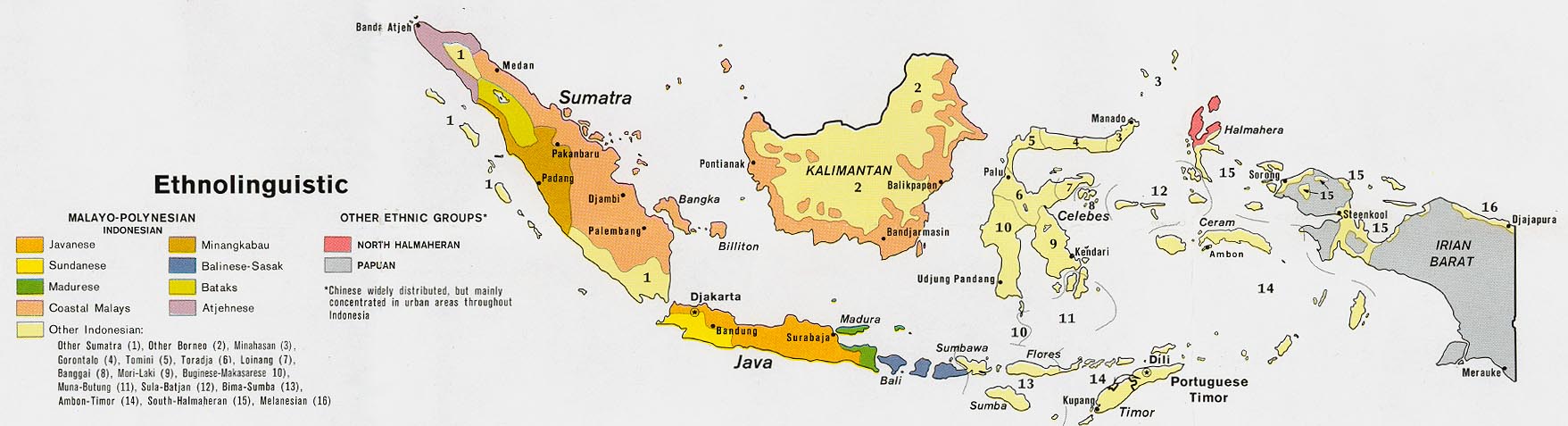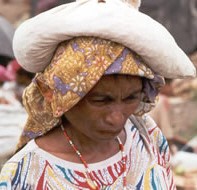

The Ende people live on the island of Flores in eastern Indonesia. Their name comes from the town of Ende, which historically served as a cultural and political center. The Ende trace their heritage to Austronesian settlers who arrived centuries ago, blending local traditions with influences from traders and missionaries who passed through the archipelago. Over time, they developed a distinct language, customs, and identity. Colonial encounters, particularly with Portuguese and Dutch powers, introduced Christianity and new social structures, but traditional practices remain deeply woven into their daily lives.
The Ende people are primarily agricultural, cultivating rice, maize, cassava, and coffee on the fertile volcanic soil of Flores. Farming is often communal, with extended families working together to plant and harvest. Family ties are strong, and households typically include multiple generations under one roof. Marriage arrangements often involve negotiations between families, reflecting the importance of kinship networks.
Celebrations are vibrant, marked by traditional dances, music, and rituals that honor ancestors and community milestones. Weddings and harvest festivals are especially significant, bringing together villages in shared feasts. Food staples include rice, corn, and fish, with coconut and spices adding flavor to daily meals. Coffee, grown in the highlands, is both a livelihood and a cherished drink during social gatherings.
The Ende people are largely identified with Christianity, particularly Catholicism, due to Portuguese missionary influence. However, many still blend Christian practices with traditional animistic beliefs, such as reverence for ancestral spirits and rituals tied to agriculture. Evangelical presence is small, and while churches exist, syncretism often shapes spiritual life. Faith is sometimes seen more as cultural identity than personal transformation, leaving room for deeper discipleship and gospel-centered renewal.
The Ende people face both spiritual and physical challenges. Many have heard the name of Christ, but discipleship is shallow, and traditional beliefs continue to hold sway. There is a need for strong biblical teaching that emphasizes Christ as Lord over all areas of life.
Poverty and limited access to healthcare also affect communities, especially in rural areas where farming is vulnerable to droughts and natural disasters. Education opportunities are limited, and young people often migrate to cities, risking the loss of cultural identity and spiritual grounding. The Ende need holistic transformation that addresses both their material struggles and their spiritual hunger for truth.
Pray that the Ende people will experience the blessing of Jesus Christ in every aspect of their lives, becoming a light to the wider Flores region.
Pray that Ende believers will grow in faith and become part of the mission force, carrying the gospel to neighboring groups.
Pray for physical needs: sustainable farming practices, access to healthcare, and opportunities for education.
Pray for the faithful translation and wide distribution of the Bible, discipleship resources, and evangelism materials.
Scripture Prayers for the Ende in Indonesia.
Grimes, Charles E., and Elizabeth M. Grimes. Languages of Eastern Indonesia. SIL International, various editions.
SIL International. Ethnolinguistic Notes on Central Flores Languages. Dallas, TX: SIL.
Steinhauer, Hein. Religion and Syncretism in
| Profile Source: Joshua Project |