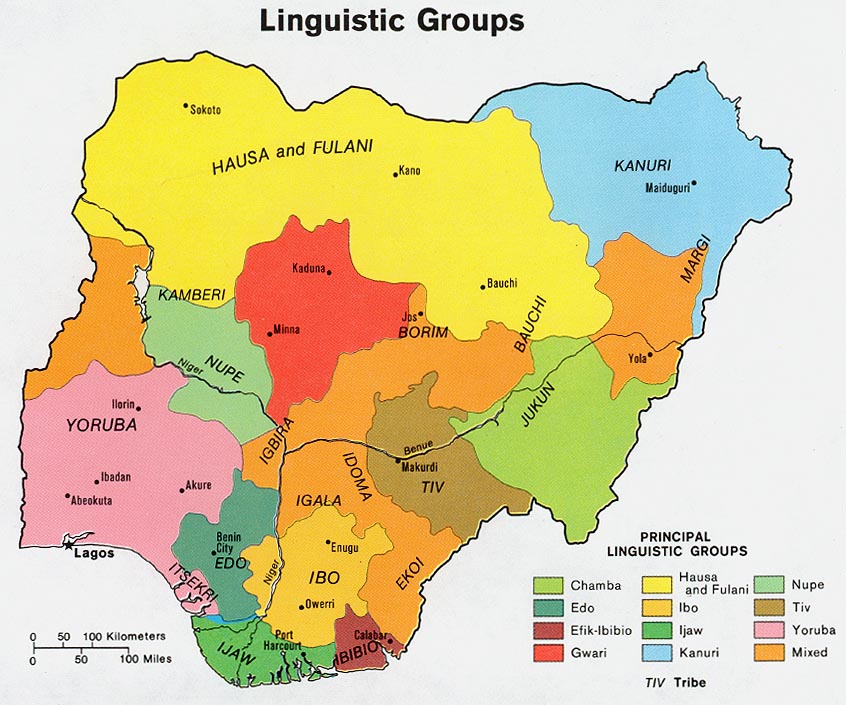
The Eki are a small indigenous people group living in Cross River State in southeastern Nigeria, situated northeast of the Efik and south of Idere. They speak the Eki language, a member of the Niger-Congo family, and it is thought to be the first language of virtually everyone in the community. Because the language is not taught in formal schools, its long-term vitality depends on transmission within families and villages rather than institutional support.
Cross River State takes its name from the Cross River, which runs nearly the full length of the state and has shaped the culture and movement of peoples in this region for centuries. Historically, the peoples of southeastern Nigeria had complex inter-group relationships involving trade, conflict, and the exchange of cultural practices. The Eki are among many small ethnic communities in the Cross River region whose distinct identity has persisted across generations despite proximity to larger neighboring groups such as the Efik. Nigeria's experience of colonialism, missionary activity, and post-independence development has touched even small communities like the Eki, and today they live within a nation that ranks among the most religiously complex in the world.
The Eki are primarily subsistence farmers, as is common throughout Cross River State, where the land supports crops including cassava, yams, plantains, maize, and cocoyam. Family life is organized around extended households, with elders holding authority in matters of land, inheritance, and community decisions. Marriage remains a social covenant that connects not just individuals but families, and traditional expectations around bride price and family approval continue to shape how unions are formed.
Food preparation follows well-worn patterns passed from mothers to daughters, with soups and stews built on local vegetables and proteins forming the backbone of daily meals. Community celebrations — including harvest festivals and rites of passage — bring families together and reinforce communal bonds. Music, dancing, and shared meals mark significant life events, and the rhythms of the agricultural calendar shape when and how these gatherings take place.
Nigeria's southeastern region faces ongoing challenges including limited access to quality healthcare, educational opportunities, and reliable infrastructure. For the Eki, as for many rural communities, daily life involves hard physical labor with modest material resources.
The majority of the Eki identify as Christian, and Christianity is by far the dominant religion in the community. Churches are a visible and regular part of community life, and Christian practice shapes the social calendar, family observances, and community ethics. However, a portion of the Eki community continues to practice traditional ethnic religions, which center on beliefs about the spirit world, ancestors, and natural forces. These practices — often involving community rituals and the observance of taboos — have persisted alongside Christianity in some households and villages.
Although the evangelical presence among the Eki is relatively small, it exists. This means that some Eki believers have come to a saving knowledge of Jesus Christ and hold to the Bible as their guide. Even so, much of the broader Christian identification in the community may be nominal, reflecting cultural heritage more than personal faith and transformation. A significant deepening of Evangelical commitment across the community is still needed.
The Eki need greater access to educational resources and economic development opportunities to improve living standards across the community. Bible portions in the Eki language were published only recently, in 2024, representing a significant step forward — but a full New Testament and complete Bible translation are still needed so that the Eki can access God's Word comprehensively in their heart language. The community would greatly benefit from discipleship resources in the Eki language to help believers grow in sound biblical faith rather than a blend of Christian profession and traditional spirit beliefs. The evangelical believers among the Eki carry a responsibility to share the gospel not only within their own community but with neighboring peoples throughout the Cross River region who also remain in spiritual need.
Pray for the completion of a full Bible translation in the Eki language so that believers can study and be discipled from God's complete word.
Pray for the evangelical believers among the Eki to grow in their faith, becoming grounded disciples who help others move from nominal Christianity to genuine, saving knowledge of Jesus.
Pray that Eki Christians will share the gospel boldly with people from other communities throughout Cross River State.
Pray for improved schools, healthcare, and economic opportunity for the Eki people so that they may flourish in every aspect of life.
Scripture Prayers for the Eki in Nigeria.
https://www.ethnologue.com/language/eki/
https://www.bible.com/versions/4339
https://www.britannica.com/place/Nigeria/Languages
https://www.marylandsisterstates.org/about-cross-river-state-nigeria/
| Profile Source: Joshua Project |