


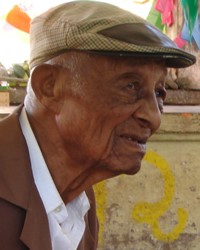

Cape Verdeans are a people native to Cape Verde an archipelago of volcanic islands located in the North Atlantic Ocean roughly 250 miles off the northwest coast of Africa. The islands were uninhabited when Portuguese sailors arrived in the fifteenth century and subsequently colonized them, importing West Africans to work on plantations. Over centuries, intermarriage between Portuguese settlers and enslaved Africans produced a Creole people with a distinct mixed heritage. Most Cape Verdeans today trace their ancestry to both African and Portuguese roots, and they speak Kabuverdianu — a hybrid language built from Portuguese and West African languages — alongside Portuguese, the official language of Cape Verde.
Because Cape Verde has few natural resources, emigration has long been a defining feature of Cape Verdean life. Repeated droughts during the twentieth century accelerated this pattern, and today more Cape Verdeans live outside their homeland than within it. Their diaspora spans multiple continents, with communities across Europe, North and South America, and sub-Saharan Africa. Gabon, a French-speaking country on the Atlantic coast of Central Africa, has drawn Cape Verdean migrants seeking employment in its oil-driven economy. Though a small community, Cape Verdeans in Gabon carry with them the resilience and cultural identity that has defined their people through generations of migration.
Cape Verdeans in Gabon tend to settle in or near Libreville, the capital, where employment opportunities are concentrated. Many find work in Gabon's service sector, trade, or in roles connected to the oil and gas industry that drives the national economy. Portuguese-speaking Cape Verdeans must navigate daily life in a predominantly French-speaking country, which can create barriers to employment and social integration.
Family bonds are central to Cape Verdean identity, and those in Gabon often maintain strong ties to relatives back home through remittances and regular communication. The diaspora experience can be isolating, but Cape Verdeans tend to form tight-knit communities wherever they settle, drawing on shared language and culture for support.
Food is an important expression of Cape Verdean heritage. Even abroad, families will prepare traditional dishes such as cachupa, a hearty slow-cooked stew of corn, beans, and meat or fish that serves as a kind of national dish. Music is equally central to Cape Verdean culture — genres like morna and funaná connect people to their island roots and are present at gatherings and celebrations. Feast days tied to the Catholic calendar, along with community gatherings, mark the rhythm of social life.
Largely because of centuries of Portuguese influence, most Cape Verdeans identify as Roman Catholic. The Catholic Church has shaped their cultural identity in deep ways, from baptism and marriage rites to feast day celebrations. Church attendance and Catholic identity, however, do not always reflect a vibrant personal faith — for many, Catholicism is more of a cultural inheritance than an active spiritual commitment.
There is an evangelical presence among Cape Verdeans, including denominations such as the Church of the Nazarene, Assemblies of God, and Seventh-day Adventist communities. Some Cape Verdeans also blend Christian practice with traditional African beliefs and customs. In Gabon, where animism and folk religion remain culturally present, Cape Verdean Christians may encounter additional spiritual influences.
Cape Verdeans in Gabon face the practical challenges common to immigrant communities: language barriers, limited legal protections, economic vulnerability, and distance from family support systems. Access to quality healthcare and stable employment can be difficult, particularly for those without formal documentation or advanced language skills in French. Spiritual needs are significant as well. Many Cape Verdeans carry a nominal Catholic identity without a living relationship with Jesus Christ. They need opportunities to hear the gospel clearly presented and to experience the transforming power of genuine faith. Evangelical believers within the community can share their faith with fellow Cape Verdeans and with their Gabonese neighbors.
Pray that Cape Verdean believers in Gabon will grow in their faith and actively share Christ with those in their community and beyond.
Pray for Cape Verdean families separated by migration — that God will sustain and protect them, and that hardship will draw them toward Christ.
Pray that nominal Catholic identity will give way to a personal, living faith in Jesus Christ among Cape Verdeans in Gabon.
Pray for the practical needs of Cape Verdean migrants in Gabon, including employment, language access, and stable community life.
Scripture Prayers for the Cape Verdean in Gabon.
https://en.wikipedia.org/wiki/Cape_Verdeans
https://en.wikipedia.org/wiki/Cape_Verde
https://en.wikipedia.org/wiki/Demographics_of_Cape_Verde
https://migrants-refugees.va/country-profile/capo-verde/
https://www.africatourvisa.com/cape-verde/people/
| Profile Source: Joshua Project |


