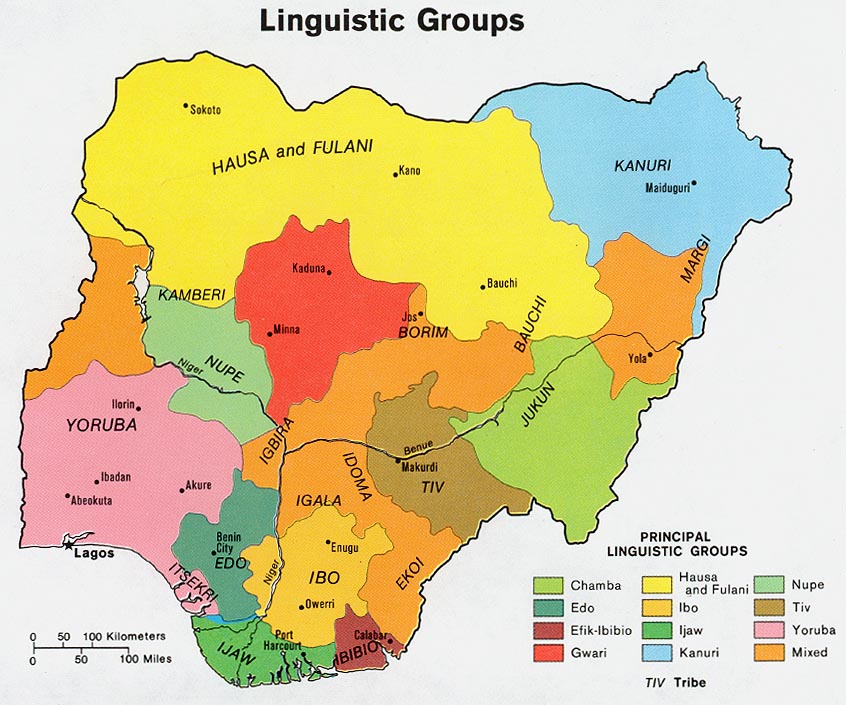
The Baan people are an indigenous ethnic group living in the oil-producing Niger Delta region of Rivers State in southern Nigeria, concentrated in the Gokana, Tai, and Eleme Local Government Areas around the town and villages of Ban-Ogoi. Their language, also called Baan, is a member of the Kegboid language family — a cluster of related Niger-Congo tongues spoken across Ogoniland that includes Khana, Gokana, T--, and Eleme. Although these languages share a common ancestry, linguists and the communities themselves regard them as distinct, and the Baan speak their own variety as their heart language. A Bible translation in Baan is currently underway, but no complete Scripture has yet been published.
The Baan are part of the larger Ogoni people, a community that oral tradition traces to a migration from present-day Ghana, traveling by canoe and eventually settling in the eastern Niger Delta well over two thousand years ago. Archaeological and linguistic evidence suggests the Ogoni have inhabited their homeland since before 15 BC, making them among the oldest settled peoples in the Delta. Though they maintained relative isolation through the era of the transatlantic slave trade — remarkably, no Ogoni person was enslaved — the arrival of British colonial forces in 1901 and their formal subjugation by 1914 brought sweeping disruptions to their way of life. The discovery of oil in Ogoniland in 1958 brought even greater upheaval. Decades of extraction by Shell and the Nigerian government produced enormous wealth for others but left the Ogoni people — including the Baan — with poisoned rivers, contaminated soil, and economic marginalization.
The Baan, like their Ogoni neighbors, have historically been farmers and fishers. Yam and cassava are the foundational crops, along with plantain, palm products, and assorted vegetables suited to the tropical Niger Delta climate. Palm oil, extracted from the abundant palm trees of the region, is central to the local diet and economy. Fish caught from the rivers and coastal waters has long supplemented what families grow on their own plots. However, decades of oil spills and gas flaring have severely degraded Ogoniland's farmland and waterways, making it increasingly difficult to live off the land as previous generations did. Many Baan households struggle with food insecurity as a direct consequence of environmental destruction they did not cause and have never been compensated for.
Family life is organized around extended households, with elders holding significant authority in matters of land rights, marriage, and community governance. Each community maintains local leadership structures, including chiefs and community development bodies. The annual yam harvest festival is the most important communal celebration of the year, bringing families together with music, dance, and thanksgiving for the land's provision. Rites of passage and other community milestones are also observed, reinforcing the social bonds that hold the community together through hardship.
Christianity is the primary religion of two thirds of the Baan people, and most of the community identifies with the Christian faith in some form. Churches are a visible part of community life, and Christian observances mark much of the calendar year. However, a substantial portion of the Baan community continues to practice traditional ethnic religion, which centers on a belief in a supreme deity alongside a spirit world populated by ancestral spirits and natural forces believed to influence daily life. Land and rivers, considered sacred in Ogoni cosmology, carry deep spiritual significance — a belief that intersects painfully with the oil-related destruction of those same natural resources. Traditional ceremonies, offerings, and the observance of community taboos persist, often alongside Christian profession.
Evangelical believers — those who hold to the authority of the Bible and personal faith in Jesus Christ as the only path to salvation — are present among the Baan but remain a modest minority. Much of the Christian identification in the community may be more cultural than transformative, meaning many who call themselves Christian may not yet have personally trusted Christ or be grounded in biblical faith.
The Baan urgently need environmental remediation and economic recovery from the devastation caused by decades of oil pollution, which has robbed them of their agricultural heritage and contaminated their drinking water. Access to quality healthcare remains limited, and the community would benefit greatly from investment in schools and vocational training so that young people can build stable futures. A complete Bible translation in the Baan language is essential so that the whole counsel of God's Word is available to speakers in their mother tongue, enabling deeper discipleship and genuine spiritual transformation. The Evangelical believers already present among the Baan have an opportunity — and a calling — to make disciples within their community and to become part of the gospel witness to other less-reached peoples across the Niger Delta region.
Pray that God will raise up advocates for environmental justice in Ogoniland and that the Baan people will experience physical healing of their land, waters, and health.
Pray for the completion of a full Bible translation in the Baan language and for resources to disciple believers into a mature, Scripture-grounded faith.
Pray that the Holy Spirit will bring the large portion of the Baan community that practices traditional ethnic religion into a saving knowledge of Jesus Christ.
Pray that Baan evangelical believers will grow in boldness and become active participants in taking the gospel to unreached peoples throughout Nigeria.
Scripture Prayers for the Baan in Nigeria.
https://en.wikipedia.org/wiki/Ogoni_people
https://joshuaproject.net/people_groups/19639/NI
https://naijadetails.com/the-ogoni-people-of-nigeria/
https://www.101lasttribes.com/tribes/ogoni.html
https://www.encyclopedia.com/humanities/encyclopedias-almanacs-transcripts-and-maps/ogoni
https://www.ethnologue.com/language/bvj/
| Profile Source: Joshua Project |