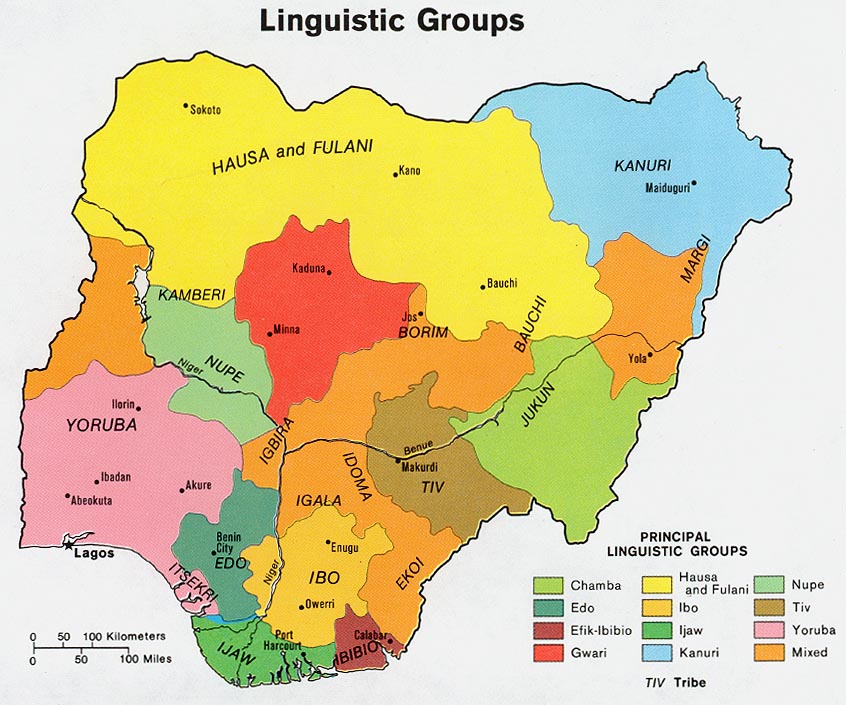
The Arum-Chessu are a small indigenous people group living in the Akwanga Local Government Area of Nasarawa State in north-central Nigeria, near the town of Wamba. Their community spans eight villages in the hills and savanna of Nigeria's Middle Belt — seven speaking the Alumu dialect and one, the village of Chessu, speaking the Tesu dialect. The two dialects differ mainly in intonation and are mutually intelligible. On the Joshua Project website, their language is listed as Arum, a tongue classified in the Alumic branch of the Plateau division of the Benue-Congo language family, making it linguistically distinct from the larger surrounding languages such as Hausa, Eggon, and Mada. The area that is now Nasarawa State was historically subject to pressure from the Zaria Emirate and later absorbed into the Sokoto Caliphate during the nineteenth-century Fulani jihad before coming under British colonial administration as part of the Northern Nigeria Protectorate. Like many smaller Middle Belt peoples, the Arum-Chessu navigated these pressures while preserving their own language and social structures. The gospel reached their area beginning in 1936 when the first missionary visited to preach, and a mission station was established among the Alumu at Arum around 1952. That early witness was met with significant opposition, as community members feared that missionaries would expose the secrets of their traditional religious practices. Over time, however, the church took root and the community changed.
The Arum-Chessu are subsistence farmers whose daily lives follow the rhythm of Nasarawa State's tropical wet and dry seasons. Guinea corn (sorghum) is the primary staple crop, along with millet, yams, cassava, acha (fonio), maize, cowpeas, cocoyam, sweet potatoes, and beans. Women tend kitchen gardens and process grain for household use, while men take on the heavier field work and hunting that supplement the family's food supply. Goats and chickens are raised and are typically reserved for celebratory occasions such as weddings or naming ceremonies. The Agamo — the traditional chief — serves as the central authority figure in community life, maintaining social order and mediating between the Arum-Chessu and outside governing structures. Family life is shaped by extended kinship ties, and the birth of a child, particularly a son, is a celebrated community event. When a boy is born, a horn is blown and the Mangam cult comes out to honor the newborn; daughters are welcomed more quietly. Children are given names the same day they are born. Nasarawa State's Middle Belt location has made it vulnerable to the recurring farmer-herder conflicts that have cost lives, displaced families, and disrupted agricultural livelihoods across the region.
The majority of the Arum-Chessu identify as Christians, a testimony to the long-term fruit of mission work that began in the mid-twentieth century and faced early hardship. Churches are present in the community, and the New Testament has been translated into the Arum language, giving believers direct access to God's word in their heart tongue. However, a substantial portion of the community continues to practice traditional ethnic religion, which centers on the worship of local deities, the use of ritual specialists, and ceremonial practices tied to the agricultural seasons and key life events. The Mangam cult and other indigenous religious structures remain active among those who have not turned to Christ. Some believers may also navigate pressure to participate in traditional ceremonies that are not consistent with their Christian faith. The Arum-Chessu church faces the ongoing challenge — familiar across Nigeria's Middle Belt — of moving believers from nominal Christian identity into robust, Scripture-formed discipleship that transforms every dimension of life.
Access to quality healthcare, clean water, and reliable educational infrastructure remains a genuine gap in the rural villages of Akwanga LGA where the Arum-Chessu live. The persistent threat of violence from farmer-herder conflicts creates insecurity that disrupts farming, displaces families, and undermines the stability needed for community flourishing. Spiritually, the Arum church needs biblically grounded pastors and teachers who are equipped to form genuine disciples rather than maintain nominal Christianity alongside traditional spiritual practice. The New Testament exists in Arum, but literacy development and trained teachers are needed so that this gift of Scripture can actually be read and applied in homes and congregations.
Pray that the Lord Jesus Christ — who himself is the bread of life — would draw the Arum-Chessu into saving relationship with him, and that the church among them would grow in genuine, Spirit-filled faith.
Ask God to bring peace to the farmer-herder crisis across Nasarawa State, protecting Arum-Chessu families from violence, restoring displaced people to their land, and providing healing to those who have suffered loss.
Pray for the growth of literate, biblically trained leaders in Arum-Chessu churches who will teach the New Testament with clarity and conviction, and disciple the next generation.
May the believers among the Arum-Chessu be moved by the love of Christ to send workers from their own community to the many peoples of Nigeria and the surrounding region who have not yet heard the gospel.
Scripture Prayers for the Arum-Chessu in Nigeria.
http://www.rogerblench.info/Language/Niger-Congo/BC/Plateau/Alumic/Tesu%20wordlist%20Unicode.pdf
https://en.wikipedia.org/wiki/Nasarawa_State
https://globalrecordings.net/en/language/aab
https://www.britannica.com/place/Nasarawa
| Profile Source: Joshua Project |