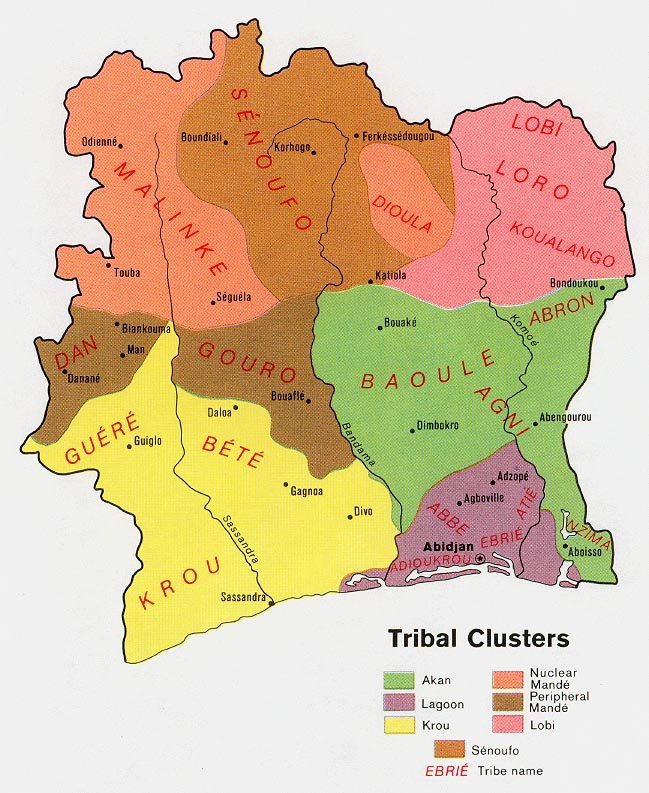
The Ngen people live in the central region of Cote d'Ivoire, where their identity has been shaped over generations by local migrations, village alliances, and close ties to the land. Their history is intertwined with neighboring peoples who share similar languages and cultural patterns found throughout the forest–savanna transition zone of West Africa. Oral tradition plays an important role in preserving stories, lineage connections, and community memory.
Over time, the Ngen have interacted with traders, farmers, and workers from various ethnic groups. Roads, markets, and regional schooling have increased contact with the wider nation, but many Ngen communities continue to maintain strong bonds rooted in local customs and family structures.
Most Ngen communities depend on farming, especially crops suited to the climate of central Cote d'Ivoire. Families often work together in cultivating fields, with seasonal rhythms guiding agricultural labor. Small livestock, household gardens, and participation in regional markets help sustain daily life.
Village life emphasizes cooperation, respect for elders, and the responsibilities shared among extended families. Homes are typically built with materials found locally, though modern building methods and supplies are increasingly common where roads and trade allow.
Children often divide their time between school, family responsibilities, and learning traditional skills. Cultural practices involving storytelling, music, and community celebrations remain important markers of identity in many Ngen villages.
About half Ngen identify with Islam, while others are connected to various forms of Christianity. Levels of personal commitment vary, and religious identity may be shaped by family tradition, community expectations, or local influences. As in many parts of West Africa, outward affiliation does not always indicate deep understanding or regular practice, and beliefs can differ widely from one household to another.
Some Ngen who identify with Islam follow community customs related to prayer or religious holidays. Others who identify as Christian may participate in church gatherings, prayer, or Scripture teaching when available. Older cultural practices still be present in some families, though these should not be overstated.
The Ngen benefit from consistent, caring ministry that respects their culture while pointing them toward the truth of scripture. Discipleship, training for emerging leaders, and long-term relationships are important for helping believers deepen their understanding of Christ.
Resources that support scripture engagement can help individuals and families grow in their faith. Strengthening households, encouraging young people, and equipping local leaders contribute to building a strong foundation for future generations of believers.
Pray for Ngen believers to grow in spiritual maturity, grounded in scripture and guided by the Holy Spirit.
Pray for local leaders who can teach faithfully, encourage unity, and model Christlike character.
Pray for Ngen families to experience harmony, love, and renewed hope through the gospel.
Pray for increasing engagement with scripture in forms that encourage understanding and application.
Pray that Ngen believers will be moved to share Christ with neighboring peoples in love and humility.
Scripture Prayers for the Ngen in Côte d'Ivoire.
https://www.ethnologue.com/country/CI
https://www.britannica.com/place/Cote-dIvoire
https://www.unesco.org/en/articles/west-african-cultural-practices
https://www.africanstudies.org/resources/ regional cultural summaries
| Profile Source: Joshua Project |