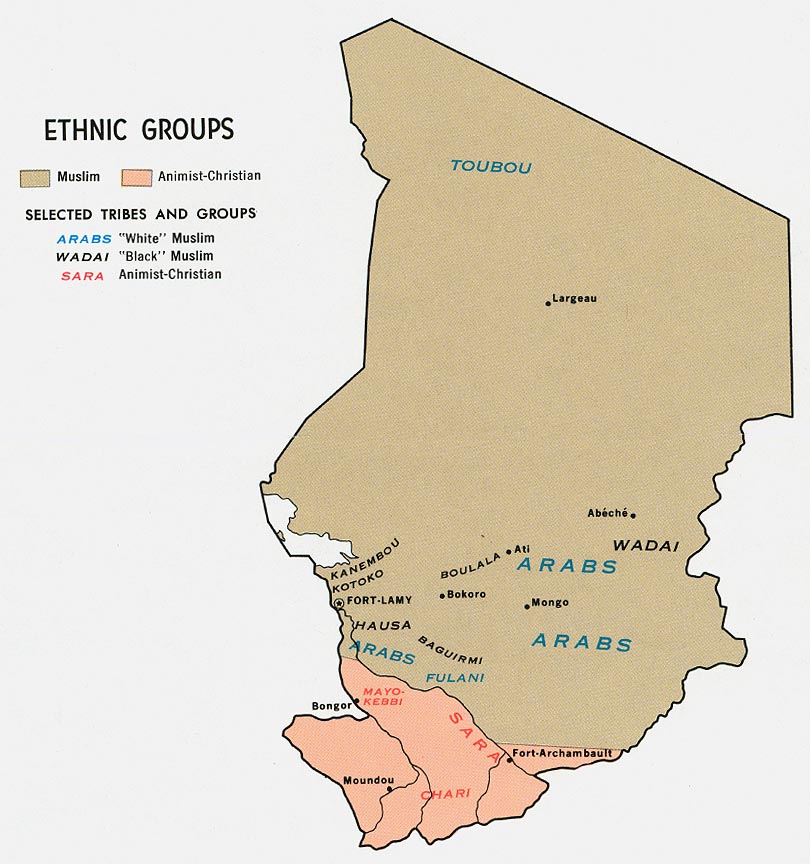
The Dai, also known locally as Dari, are an ethnic people of southwestern Chad whose identity is shaped by the Dai language, a member of the Bagirmi branch of the Central Sudanic family. Their traditional homeland spans the river valleys and savanna plains of the Moyen-Chari and Mayo-Kébbi regions, landscapes that have supported village life and seasonal farming for generations. The Dai language carries stories, proverbs, and oral history that link present-day communities with ancestral memory. Through extended family networks and clan ties, the Dai have maintained shared patterns of social life even as they have interacted with neighboring peoples and participated in regional trade and exchange.
Life among the Dai revolves around strong family and community relationships that organize daily work and mutual support. Subsistence farming of millet, sorghum, and other staple crops provides the basis of local diets, while tending livestock contributes to household livelihoods. Extended families cooperate in planting, harvesting, food preparation, and caring for children and elders, reinforcing bonds across age groups. Seasonal markets and regional exchange create avenues for social and economic interaction beyond village borders, and many Dai also use Chadian Arabic or other regional lingua francas in broader communication while retaining the Dai language as the primary means of cultural expression and everyday talk. Music, dance, and oral storytelling remain important cultural forms that express community memory and identity.
Christianity is practiced among some Dai people, and local churches provide settings for worship, teaching, and fellowship that shape spiritual life within communities. Portions of scripture are available in languages that Dai people understand, enabling personal reading and corporate engagement with biblical texts. Traditional spiritual concepts related to ancestors, the spirit world, and customary religious practices have historically informed cultural outlooks and may continue to influence personal perspectives, even as Christian belief now serves as the central spiritual framework for many individuals and families.
Dai believers benefit from ongoing encouragement in spiritual growth and discipleship that is rooted in Scripture and sensitive to cultural context. Support for local leadership through biblical training, mentorship, and accessible teaching resources can help pastors and church leaders serve with wisdom and humility. Families and youth especially benefit from opportunities that integrate Christian teaching with daily life and community rhythms, helping younger generations grow in spiritual maturity. Opportunities that foster Scripture engagement and fellowship across village congregations can help nurture unity and resilience among believers.
Pray that Dai believers would grow in love for Christ and deepen their understanding of God's Word.
Pray for pastors and church leaders to lead with wisdom, humility, and compassion.
Pray for families to be strengthened in faith, unity, and care, with children and youth nurtured in Christ-centered values.
Pray for vibrant engagement with Scripture in languages they understand, bringing hope, insight, and transformation.
Pray that the Dai community would have a clear and gracious vision to share the hope of Christ with neighboring peoples in ways that honor cultural identity and reflect Christ-like compassion.
Scripture Prayers for the Dai, Dari in Chad.
https://en.wikipedia.org/wiki/Dai_language_(Chad)
https://www.ethnologue.com/language/drq
https://www.sil.org/language/maps/AFR/region
| Profile Source: Joshua Project |