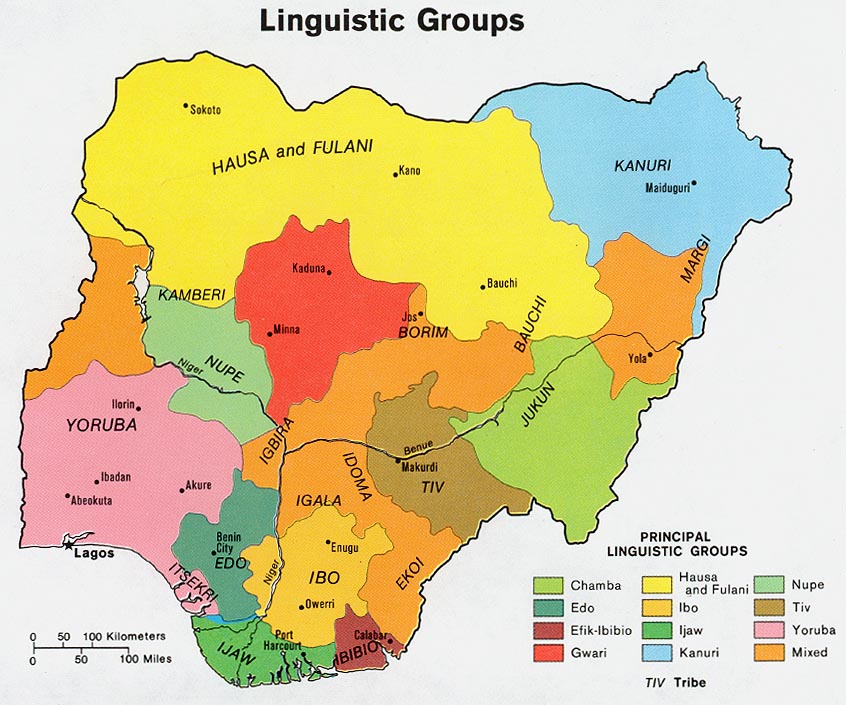
The Okpamheri people, whose name literally means "we are one," are an ethnic group residing in the Akoko-Edo Local Government Area of Edo State, Nigeria. Their history is defined by a deep sense of unity and resilience; in the mid-19th century, several autonomous villages and clans banded together to protect themselves from the slave raids of the Nupe and Fulani empires. This defensive alliance eventually crystallized into a shared ethnic identity. They are part of the Northwestern Edoid language family and represent one of the largest and most linguistically diverse clusters in the Akoko-Edo region, often serving as a cultural bridge between the various hill tribes of the area.
The Okpamheri are primarily subsistence farmers who take advantage of the hilly and fertile terrain of northern Edo State. They cultivate yams, cassava, maize, and cocoa, with yam festivals serving as major cultural milestones in their calendar. Their society is known for being exceptionally hospitable and peaceful, structured around a collection of towns and villages such as Ibillo, Imoga, Lampese, and Bekuma. While the Okpamheri language is a central marker of their heritage, it faces pressure from more dominant regional languages like English, Yoruba, and Nigerian Pidgin, especially among the younger generation. The people are also skilled in traditional weaving and local crafts, which are often traded in bustling regional markets.
The primary religious identity of the Okpamheri is Ethnic Religions, with beliefs centered on ancestral veneration and the recognition of spiritual forces tied to the land. They believe in a supreme creator but maintain that daily affairs are mediated by spirits that reside in the hills and groves surrounding their homes. While some of the Okpamheri identify as Christian (including a small evangelical presence) many communities have had only superficial contact with the gospel despite over a century of Catholic and Anglican presence in the wider region. Traditional taboos and rituals still hold significant influence over social conduct and local justice.
Spiritually, the Okpamheri are considered partially reached. There is a significant need for evangelical work that addresses the deep-seated fears associated with traditional animism and provides a clear, culturally relevant presentation of the gospel. While Bible portions exist in the Okpamheri language, the community lacks a complete heart-language Bible, making discipleship and church planting difficult. Socially, the region suffers from a lack of basic infrastructure; many villages struggle with inadequate medical care, poor road access, and a lack of clean drinking water. There is also a need for educational programs that help preserve the Okpamheri language while equipping the youth with modern skills.
Pray for the Okpamheri to experience the transformative power of the gospel, leading to a freedom from the fear of traditional spiritual forces.
Pray for the translation of the full Bible into the Okpamheri language, and for the effective use of the JESUS Film and oral storytelling tools.
Pray for Nigerian believers who are currently working among or praying for the Okpamheri, that they would be filled with boldness and cultural sensitivity.
Pray for the improvement of infrastructure in the Akoko-Edo region, specifically for better healthcare and educational facilities for Okpamheri families.
Pray for the unity of the Okpamheri people to be grounded in a shared faith that brings lasting peace and development to their communities.
Scripture Prayers for the Okpamheri in Nigeria.
International Mission Board (IMB). Okpamheri of Nigeria Research Profile.
Elugbe, B. O. Comparative Edoid: Phonology and Lexicon. (University of Port Harcourt Press).
SIL International. A Sociolinguistic Profile of Southern Northwestern Edoid Languages.
Ethnologue. Okpamheri (opa) Language Documentation.
| Profile Source: Joshua Project |