


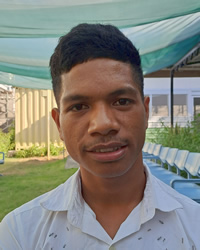

The Mambai people are the second largest ethnic group in Timor-Leste, speaking the Mambae language, which belongs to the Central-Eastern Malayo-Polynesian branch of the Timoric languages. The Mambae language is the second most common mother tongue in the country, reflecting the significant presence of this people group in the central mountainous regions. The Portuguese originally knew them as the Maubere, with Maubere or Mau Bere being a widespread male first name that carries cultural significance among the Mambai.
The history of the Mambai has been deeply shaped by centuries of external influences and conflict. Portuguese colonizers arrived in Timor in the sixteenth century, establishing a formal colony in 1702 and introducing Roman Catholicism through Dominican missionaries. The Portuguese maintained limited administrative control, allowing local rulers to retain significant autonomy while the Catholic faith gradually became woven into Timorese society. During World War II, Japanese forces occupied the island, and thousands of Timorese, including many Mambai, lost their lives in the conflict.
Following Portugal's decolonization in 1975, Timor-Leste declared independence but was invaded by Indonesia just nine days later December 7, 1975. The subsequent Indonesian occupation lasted twenty-four years and was marked by extreme violence, with estimates suggesting that over 100,000 people died from direct violence, disease, and famine. The Mambai endured this brutal period alongside other Timorese groups, suffering under military oppression while maintaining their cultural identity and resistance. A UN-backed referendum in 1999 finally paved the way for independence, and Timor-Leste became a fully sovereign nation on May 20, 2002, marking the beginning of a new chapter for the Mambai people.
The Mambai primarily reside in the central mountainous regions of Timor-Leste, particularly in the districts of Ermera, Aileu, Turiscai, Maubisse, Ainaro, and Same, extending from the interior south of Dili to parts of the south coast. Their traditional dwellings are circular houses with distinctive conical roofs, reflecting architectural patterns that have been passed down through generations. The terrain where they live is characterized by steep slopes and rugged mountains, which present both opportunities and challenges for daily life.
Agriculture forms the backbone of Mambai livelihoods, with most families engaged in subsistence farming that relies heavily on seasonal rainfall. The Mambai cultivate maize, rice, and various root vegetables such as cassava and sweet potatoes on small plots of land, often on hillsides that are vulnerable to erosion. Coffee has become an important cash crop for some families, though most agricultural production remains oriented toward meeting household food needs rather than generating income. The challenges of limited arable land, poor soil quality, variable rainfall, and lack of irrigation infrastructure make farming difficult and often leave families vulnerable to food insecurity.
Beyond agriculture, daily life for the Mambai involves strong community bonds and the maintenance of traditional social structures. Villages are organized around extended family networks, and elders continue to hold important roles in guiding community decisions and passing down cultural knowledge. Although Timor-Leste has made progress in developing infrastructure since independence, many Mambai communities in remote mountainous areas still lack reliable access to roads, electricity, clean water, healthcare facilities, and educational opportunities. Children often walk long distances to attend school, and medical care requires difficult journeys to towns or district centers. The Mambai have also been affected by the broader economic challenges facing Timor-Leste, including high rates of poverty and unemployment, though some have migrated to urban areas or to Australia seeking better opportunities.
The religious life of the Mambai reflects a complex blend of Roman Catholicism and traditional animistic beliefs that predated the arrival of Christianity. The vast majority of Mambai identify as Catholic, a legacy of Portuguese colonial influence that lasted for centuries and became deeply embedded in Timorese culture. The Catholic Church played a crucial role during the Indonesian occupation by advocating for human rights and defending the local population, which strengthened its influence and respect among the Timorese people, including the Mambai. Church attendance marks significant life events such as baptisms, weddings, and funerals, and major Catholic holidays like Easter and Christmas are widely observed.
However, beneath the surface of Catholic practice, many Mambai continue to maintain traditional animistic beliefs that see spiritual forces present in the natural world, ancestors, and sacred places. The integration of these belief systems can be seen in how community members might attend Catholic Mass while also participating in traditional ceremonies related to planting, harvest, or important family events.
Evangelical Christianity represents only a small minority among the Mambai people. There are few evangelical churches in Mambai areas, and the combination of strong Catholic identity, the influence of traditional beliefs, and geographical isolation has made evangelical church growth slow and challenging. The Catholic Church's deep historical roots and its identification with Timorese national identity create a context where conversion to evangelical Christianity can be met with skepticism or social resistance from family and community members.
The Mambai people face significant physical needs that affect their daily wellbeing and future prospects. Access to adequate healthcare remains limited in many Mambai communities, with families often traveling long distances over difficult terrain to reach medical facilities that may lack essential supplies or trained staff. Preventable diseases, malnutrition among children, and complications during childbirth continue to threaten lives in areas where healthcare infrastructure is insufficient. Clean water and sanitation are pressing concerns, as many villages lack reliable water sources and proper waste management systems, leading to health risks and disease transmission.
Infrastructure improvements including roads, electricity, and communication networks would reduce isolation and open up opportunities for economic development and access to services.
Pray that the Holy Spirit would open the hearts of Mambai families to hear and respond to the gospel message, drawing them into a personal relationship with Jesus Christ that transforms their lives and communities.
Ask God to call forth indigenous Mambai believers who will become passionate disciples and leaders, equipped to plant churches and disciple others in ways that are culturally appropriate and biblically faithful.
Pray that God would provide for the physical needs of the Mambai people, including improved healthcare facilities and personnel, access to clean water and sanitation, better roads and infrastructure, and agricultural assistance that increases food security.
Ask the Lord to protect Mambai communities from natural disasters, crop failures, and disease outbreaks, and to provide for vulnerable families struggling with poverty.
Pray for Mambai children and youth to have access to quality education that prepares them for the future, and that Christian teachers and curriculum would shape young hearts with biblical truth.
Ask God to strengthen believing families among the Mambai, helping them to stand firm in their faith despite social pressure and to model Christ-centered homes.
Ask God to break down barriers that hinder the gospel.
Scripture Prayers for the Mambai in Timor-Leste.
https://en.wikipedia.org/wiki/Mambai_people
https://www.hisfeet.com/unreached-people-groups-in-timor-leste/
https://minorityrights.org/country/timor-leste/
https://en.wikipedia.org/wiki/Timor-Leste
https://everything-everywhere.com/a-b
| Profile Source: Joshua Project |


