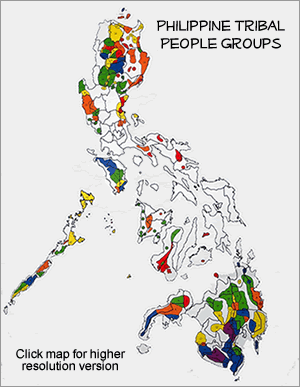

The Kamayo are an indigenous ethnolinguistic group in the eastern coast of Mindanao, Philippines, mainly in Surigao del Sur, Agusan del Sur border areas, and parts of Davao Oriental. Their language, Kamayo (also Kinamayo), belongs to the Central Philippine branch of the Austronesian family and shows regional variation.
Historically, they are connected culturally and linguistically with neighboring groups like Mandaya and Manobo peoples. Some accounts suggest that many Kamayo were originally Mandaya who transitioned culturally over time and became more integrated into lowland life and coastal settlement patterns.
Traditionally, Kamayo society was based on farming (wet rice, corn, abaca) and fishing, with small coastal communities.
Many Kamayo communities remain rural and agrarian, focused on subsistence farming and fishing.
Families value solidarity, kinship, and community bonds, frequently reflected in oral literature and folk narratives that emphasize family unity, perseverance, and hope despite hardships.
Their identity is intimately tied to place, language, and a shared way of life that centers on peace-oriented community living.
The Kamayo language has been historically strong in the home but faces pressure from Cebuano/Bisaya and Filipino national language influence.
Mother-Tongue education policies have helped other local languages nationally, but Kamayo communities still face challenges with language retention and educational access in their mother language.
Most of the people identify with Christianity, largely Roman Catholic, reflecting broad historical Catholic influence in the Philippines.
Evangelical Christians make up a little percent, meaning there are believers and local church presence, but still relatively few in proportion.
Prior to and alongside Christianity, many Kamayo traditionally held animistic and ancestral beliefs, with reverence for spirits of nature and concepts like Magbabaya (a
high deity or divine spirit) similar to neighboring Mandaya beliefs.
Even among Christian adherents, folk spirituality and cultural customs influence how people relate to faith and life events, as is common in many indigenous Philippine contexts.
Evangelical presence is modest; there is room for growth in biblical discipleship, church leadership training, and local church multiplication among the Kamayo.
They need continued efforts to equip local believers to lead outreach and establish self-sustaining evangelical churches.
Bible translations and Scripture engagement tools in Kamayo are developing, but still limited.
Access to education in Kamayo language, literacy resources, and culturally contextual discipleship materials can help strengthen both cultural identity and spiritual formation.
Pray that Kamayo families and communities will receive the good news of Jesus Christ with understanding and joy.
Pray that local believers will be empowered to share Christ boldly and compassionately within their own communities.
Pray for the Holy Spirit to move powerfully in local churches, drawing hundreds to Jesus Christ.
Pray for spiritual maturity and unity among existing Christian communities.
Pray that God's word will deeply transform hearts and communities.
Pray that believers will faithfully integrate biblical truth with love and respect for cultural heritage, helping Kamayo people see Christ as fulfilling their deepest spiritual longings.
Scripture Prayers for the Kamayo in Philippines.
https://ncca.gov.ph/about-culture-and-arts/culture-profile/glimpses-peoples-of-the-philippines/kamayo
https://jomarpandan.com/culture/the-kamayo-people-of-mindanao/
https://es.wikipedia.org/wiki/Idioma_kamayo
https://globalrecordings.net/en
| Profile Source: Joshua Project |