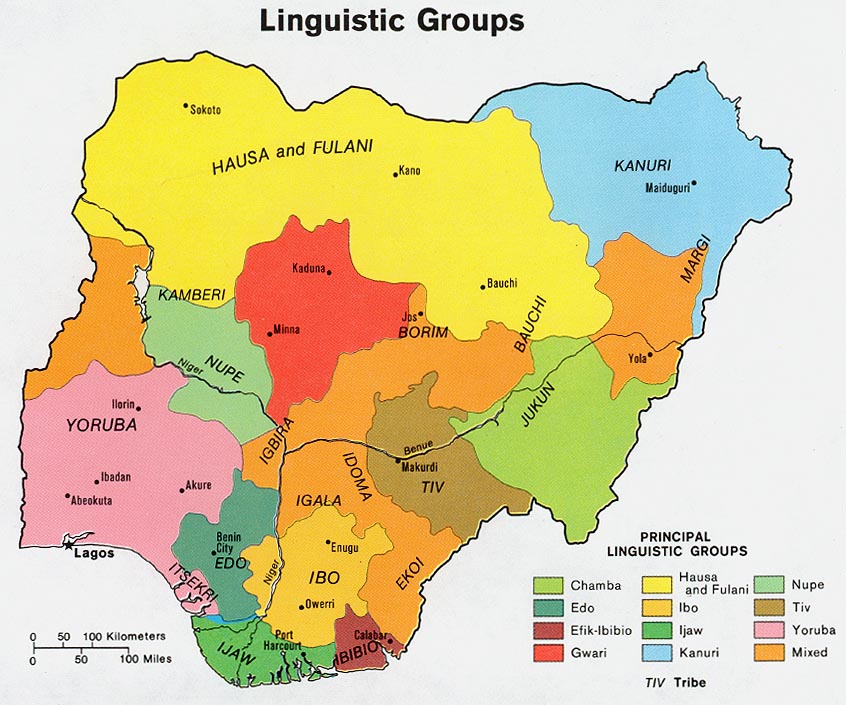

The Cham-Mwana are a small ethnic group living in the lower Gongola River Valley in northeastern Nigeria, with settlements concentrated in the region where this major tributary flows into the Benue River. They speak Dijim-Bwilim (also known as Giiwo), an Adamawa-Ubangi language that closely resembles that of their immediate neighbors, the Longuda people. The Cham and Mwana, though historically distinct groups, share the same language and have become closely associated, forming what is known as the Cham-Mwana people. Their artistic traditions, particularly distinctive terracotta pottery crafted for spiritual and medicinal purposes, reflect centuries of cultural continuity in their river valley homeland. The Cham-Mwana belong to the Adamawa-Ubangi people cluster within the broader Sub-Saharan African affinity bloc.
The Cham-Mwana are primarily agriculturalists whose daily routines follow the rhythms of planting, tending, and harvesting crops suited to their valley environment. The Gongola River Valley provides fertile soil and irrigation opportunities that sustain farming families year-round. Traditional crops include grains, vegetables, and other staple foods that form the basis of the Cham-Mwana diet and economy. Beyond farming, some individuals engage in small-scale trading and craft production, supplementing agricultural income with goods exchanged in local and regional markets.
Family life centers on extended kinship networks where multiple generations live together in tight social units. Elders hold significant authority in family decisions regarding land, marriage, resource allocation, and community matters. Meals are communal affairs that reinforce family bonds, with food preparation and consumption marking important social rhythms. Children are raised within these broader household contexts, learning cultural values, agricultural practices, and social expectations through observation and participation in daily activities.
The Cham-Mwana are known for their distinctive artistic traditions, particularly the creation of ritual pottery vessels called iterate. These terracotta vessels, crafted exclusively by men, serve sacred purposes including divination, healing, and spiritual protection. Women traditionally produce household pottery for daily use, while men's ritual vessels reflect deep spiritual knowledge and artistic skill. Community celebrations and seasonal festivals bring families together to mark important occasions through music, dancing, and communal feasting, providing occasions for cultural transmission and social bonding across generations.
The Cham-Mwana practice ethnoreligion, a spiritual system centered on traditional African beliefs that emphasize connection to the spirit world, ancestral reverence, and engagement with supernatural forces through ritual and ceremony. Their traditional worldview includes belief in spiritual beings, sacred sites within the landscape, and the power of ritualistic objects to influence health, protection, and divine favor. The practice of creating and using ritual pottery vessels reflects this worldview, with specially crafted objects believed to facilitate healing, reveal hidden causes of illness, and protect individuals and families from spiritual harm.
Younger generations, influenced by missionary presence in the region, have encountered Christian teachings and some identify with Christian faith, though traditional practices continue alongside any Christian profession. The integration of different spiritual perspectives reflects the complex religious landscape of modern Nigeria.
The Cham-Mwana face significant practical challenges that affect their daily wellbeing and prospects. Access to quality education remains limited, particularly at secondary and higher levels, restricting economic opportunity and social advancement for young people. Healthcare infrastructure is inadequate and distant from many settlements, creating barriers to maternal care, child health, and treatment of preventable diseases. The erosion of traditional knowledge among younger generations, who are increasingly educated in mission schools and exposed to modern influences, threatens the continuity of cultural practices including the art of creating ritual pottery vessels.
Spiritually, if there is a growing Christian presence among the Cham-Mwana, the church would benefit from indigenous leadership development and biblical teaching that helps believers think carefully about how Christian faith addresses their spiritual concerns and cultural worldview. Many Cham-Mwana would benefit from understanding how the gospel speaks to their deepest spiritual needs and desires for healing, protection, and divine blessing. Access to Scripture and Christian teaching in the Dijim-Bwilim language would strengthen spiritual understanding and growth among believers.
Pray that educational opportunities would expand for Cham-Mwana children and youth, providing pathways to greater economic security and enabling them to contribute fully to their communities' development and future.
Pray that healthcare access would improve throughout Cham-Mwana communities, particularly for mothers and young children, and that traditional and modern medical approaches would work together to address the health challenges facing the people.
Pray that the gospel would take deep root among the Cham-Mwana, with indigenous churches and leaders emerging to shepherd believers and carry the message of Christ to neighboring peoples who have limited Christian witness.
Pray that cultural knowledge, including traditional artistic practices and spiritual understandings, would be preserved and valued by younger generations, and that they would consider how Christian faith enriches rather than erases their cultural heritage.
Scripture Prayers for the Cham-Mwana, Dijim in Nigeria.
https://www.peoplegroups.org/Explore/groupdetails.aspx-peid=13716
https://en.wikipedia.org/wiki/Cham-Mwana
https://www.ethnologue.com/language/kks
https://joshuaproject.net/people_groups/11303/NI
https://www.barbier-mueller.ch/collections/afrique/terres-cuites-africaines/article/recipient-de-guerison-kwandalha
| Profile Source: Joshua Project |