The Central Cagayan Agta are among the indigenous Negrito peoples of the Philippines, belonging to a broader family of groups collectively known as Aeta, Agta, and Dumagat across the island of Luzon. These peoples are thought to be among the earliest inhabitants of the Philippines, preceding the later Austronesian migrations that reshaped much of the archipelago. Their long presence on the land speaks to a history that stretches back far beyond written records, rooted in the forests and rivers of northeastern Luzon.
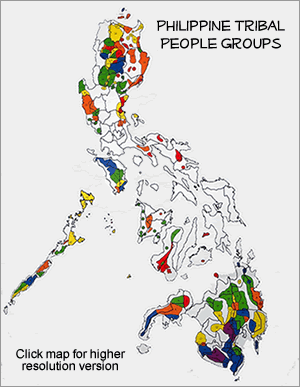
The Central Cagayan Agta are found in the inland areas of northern Cagayan Province, in communities located to the east and northeast of Baggao. Their language belongs to the Austronesian family and is used as a first language within the community. The name "Agta" is drawn broadly from a word meaning "people" or "human," a self-designation shared by several related indigenous groups across the region.
Unlike many other Filipino ethnic groups, the Agta peoples had relatively little interaction with Spanish colonial authority, as they remained in the mountains and highlands during that period. This long history of living apart from lowland society has shaped a distinct culture and a deep connection to the natural world that continues to define Agta identity today.
The Central Cagayan Agta live in small, dispersed settlements near rivers, forests, and other natural resources that support their traditional way of life. Hunting, gathering, fishing, and small-scale agriculture form the foundation of daily subsistence. Spearfishing is a particularly important skill, practiced by both men and women. Honey collection, the gathering of wild plants and fruits, and the hunting of deer, wild pigs, and birds are all part of the seasonal rhythm of Agta life.
Many forest products are traded or exchanged with lowland neighbors for rice and other staple foods, creating an ongoing relationship between the Agta and surrounding communities. Small garden plots are also cleared and planted with root crops, corn, bananas, cassava, and leafy vegetables to supplement what is gathered from the forest.
Traditional Agta homes are built from indigenous materials including bamboo, wood, cogon grass, coconut leaves, and abaca bark, and are typically clustered together in family groupings. Social life is organized around kinship, and access to land and resources is tied closely to family and clan relationships. Mobility is a natural feature of Agta life, shaped by the availability of resources and the networks of relatives in different areas.
The forests that sustain Central Cagayan Agta life face increasing pressure from migration, logging, and land encroachment. Since outside settlers and industries began penetrating formerly remote areas of the Sierra Madre region, Agta communities have faced growing challenges to their traditional territory and livelihood. These pressures place the wellbeing of future generations at risk and represent one of the most significant practical concerns facing the community today.
The traditional spiritual worldview of the Agta peoples centers on the unseen world and a belief in spirits associated with the natural environment. Views on Agta religion vary among researchers, with some describing belief in a supreme being who rules over lesser spirits, while animistic beliefs — in which spirits are understood to inhabit the natural world — are also widely attested among related Negrito groups.
Christian missionary activity reached various Agta and Aeta communities in the Philippines during the twentieth century, and some among these groups came to faith as a result. The extent of that influence among the Central Cagayan Agta specifically is not fully documented, and the depth and character of Christian understanding can vary considerably from community to community among smaller indigenous groups. Reliable information about the specific religious profile of the Central Cagayan Agta is limited, and careful, prayerful engagement remains the most faithful response.
The Central Cagayan Agta face both practical and spiritual needs. Access to quality education and healthcare is limited for many who live in remote forested areas. Literacy rates have historically been low among the Agta, making engagement with written Scripture and other educational materials especially challenging. The ongoing loss of forested land continues to threaten food security and the traditional way of life that has sustained them for generations.
Spiritually, the Central Cagayan Agta need to hear and receive the good news of Jesus Christ in a way that takes deep root in their language, culture, and community. They need faithful, patient workers who will learn their language, build genuine relationships, and labor toward a healthy and grounded local church. Any believers among them need encouragement, discipleship, and access to God's Word in a form that is meaningful and accessible to their hearts.
Pray for any believers among the Central Cagayan Agta, that they would be grounded in faith, growing in their knowledge of Christ, and becoming a witness to their families and communities.
Pray for Agta families, for parents, children, and elders, that the gospel would reach every generation and that homes would be transformed by the love of God.
Pray for the physical wellbeing of the Central Cagayan Agta, for protection of their land and forest resources, and for access to healthcare and education.
Scripture Prayers for the Agta, Central Cagayan in Philippines.
Wikipedia — Aeta people
https://en.wikipedia.org/wiki/Aeta_people
Wikipedia — Central Cagayan Agta language
https://en.wikipedia.org/wiki/Central_Cagayan_Agta_language
Ethnologue — Agta, Central Cagayan
https://www.ethnologue.com/language/agt/
Cultural Survival — Agta Forager Women in the Philippines
https://www.culturalsurvival.org/publications/cultural-survival-quarterly/agta-forager-women-philippines
Philippine Information Agency — Agta: The Guardians of the Valley
https://mirror.pia.gov.ph/features/2023/10/05/agta-the-guardians-of-the-valley
Endangered Languages Project — Central Cagayan Agta
https://www.endangeredlanguages.com/lang/2830
Encyclopedia.com — Agta
https://www.encyclopedia.com/humanities/encyclopedias-almanacs-transcripts-and-maps/agta
| Profile Source: Joshua Project |