Tatuyo in Colombia
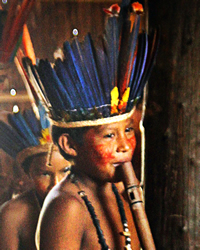
Photo Source:
AnaChina - Wikimedia
Creative Commons
|
Send Joshua Project a map of this people group.
|

| People Name: | Tatuyo |
| Country: | Colombia |
| 10/40 Window: | No |
| Population: | 400 |
| World Population: | 400 |
| Primary Language: | Tatuyo |
| Primary Religion: | Ethnic Religions |
| Christian Adherents: | 20.00 % |
| Evangelicals: | 4.00 % |
| Scripture: | New Testament |
| Ministry Resources: | Yes |
| Jesus Film: | No |
| Audio Recordings: | Yes |
| People Cluster: | South American Indigenous |
| Affinity Bloc: | Latin-Caribbean Americans |
| Progress Level: |

|
Introduction / History
The Tatuyo people speak the Tatuyo language, part of the Eastern Tukanoan branch of the Tukanoan language family. Several alternate names, including Juna, Tatutapuyo, and Wa'ikhana also know their language. The Tatuyo are indigenous to the Vaupés region of southeastern Colombia, particularly along the Pira-Paraná River and upper Papurí River. According to their mythology, they originated from a great migration up the "Milk River" in a mythical anaconda canoe, a story shared with other Tukanoan tribes. This myth reflects a historical migration and cultural divergence among related groups.
What Are Their Lives Like?
The Tatuyo live in communal longhouses called malocas, which house extended patrilineal families. Their subsistence is based on horticulture, fishing, and hunting, with cassava being a dietary staple.
Social life is deeply intertwined with ritual and myth, and their artistic expressions—especially feather ornaments and ceremonial dances—are integral to their identity. While they maintain many traditional practices, the Tatuyo have also had contact with the outside world through missionaries, traders, and health services since the mid-20th century.
What Are Their Beliefs?
Tatuyo spirituality is animistic and deeply mythological. Their religious worldview sees natural elements—animals, plants, rivers—as imbued with spiritual essence. Central to their cosmology is the Sun, the supreme shaman and creator, along with other mythic beings like the Celestial Anaconda and Earth Jaguar. Religious ceremonies often involve sacred instruments and are linked to seasonal cycles and rites of passage. The use of yahé (ayahuasca) is central to their mystical experiences. While men traditionally hold religious authority, all men may participate in spiritual practices.
There is a large Christian minority, both Roman Catholic and Evangelical.
What Are Their Needs?
Access to quality healthcare remains limited, and while traditional medicine is still practiced, the Tatuyo increasingly rely on Western medicine when available. Educational opportunities in their native language are scarce, which threatens the preservation of their linguistic and cultural heritage. Economic development that respects their autonomy and environment is needed, especially as external pressures from illegal activities and deforestation increase in their region.
Prayer Points
Intercede for the health and well-being of Tatuyo families, that they may experience healing—physically and spiritually—through the power of Jesus.
Pray that the Tatuyo people would encounter the love of Christ in a way that resonates with their cultural identity and spiritual worldview.
Ask God to raise up indigenous believers who will share the gospel in the Tatuyo language and context.