Plains Bira in Congo, Democratic Republic of
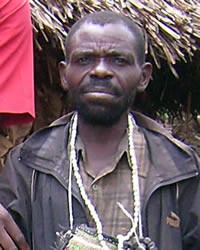
Photo Source:
Oraire Oba
|
Send Joshua Project a map of this people group.
|
| People Name: | Plains Bira |
| Country: | Congo, Democratic Republic of |
| 10/40 Window: | No |
| Population: | 336,000 |
| World Population: | 336,000 |
| Primary Language: | Bira |
| Primary Religion: | Christianity |
| Christian Adherents: | 92.00 % |
| Evangelicals: | 25.00 % |
| Scripture: | Portions |
| Ministry Resources: | No |
| Jesus Film: | No |
| Audio Recordings: | Yes |
| People Cluster: | Bantu, Central-Congo |
| Affinity Bloc: | Sub-Saharan Peoples |
| Progress Level: |

|
Introduction / History
The Plains Bira are one of two major subgroups of the Bira (also called Babira) people of northeastern Congo, Ituri Province, those inhabiting Savannah regions. Both groups of Bira trace back to a common ancestor named Bira. They are believed to have migrated into their present region around 1700 AD. Originally, they wore clothing made of barkcloth.
What Are Their Lives Like?
The Bira practice agriculture using hoe-based cultivation. They raise the staple crop cassava, plantains, maize, beans, and groundnuts. Their settlements are more dispersed than their forest brothers. Homesteads are surrounded by fields. Families live in compounds composed of several huts—separate huts for cooking, sleeping, and sometimes for guests. Extended families tend to cluster together, forming villages. Families are organized into clans tracing to a common ancestor. Clan elders control marriage, traditional rituals, and resolve conflicts. Men clear land, build houses, and decide community and political matters. Women plant, weed, harvest gardens, cook, and care for children. The Bira also interact with Mbuti Pygmy groups who live in parts of their territory, exchanging their cultivated products for the forest products of the Mbuti. Children are educated primarily by working alongside their parents, and through storytelling. Music with rhythm instruments and call-response singing is central to social life. Crafts include basket-making, pottery, wooden stools, and tools, both utilitarian and symbolic.
What Are Their Beliefs?
Most identify with some form of Christianity, with a smaller group of evangelicals and holdovers from traditional practices involving veneration of ancestors and consultation with spirits of nature. The traditional name for the Creator God is Ruhanga (One who creates) or Katonda (Giver of Life). Another name is Nyamuhanga, who is now often equated with the Christian God. In traditional religion, God is seen as distant and is not worshiped directly. Ancestral spirits are called bazimu. Their role is to protect the clan and guard the land, as well as to punish wrongdoing. Offerings of beer, food and tobacco are made to them.
What Are Their Needs?
Like all people groups of the area, the Bira have lived for many years with great insecurity due to armed conflict and the political instability of the region. This results in loss of life, rape, displacement, loss of farmland, and a breakdown of traditional authority. It makes it difficult to carry on the agriculture on which life is dependent in the region and makes food unavailable or very expensive where it is available. Health care is limited with few clinics and little medicine, but high rates of malaria, respiratory infections during the dry season, and maternal health complications. Education has also been disrupted, with the younger generation less literate and lacking vocational opportunity. Because of the importance of land and population growth, land is highly contested and land disputes easily escalate into violence. Youth are at risk of recruitment by armed groups, unemployment leading to disillusionment, and migration to cities where they are easily exploited.
Prayer Points
Pray the Bira church will grow deep and biblical.
Pray that the church will become a leader in finding vocational solutions for youth and young families.
Pray for a resolution to or calming of the tensions and conflict.
Pray that the Bira will take their place in completing the great commission in Africa.
References