Wampanoag in United States
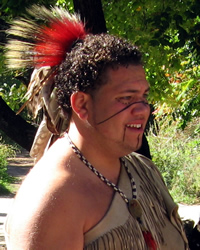
Photo Source:
Brian Herzog - Flickr
Creative Commons
|
Send Joshua Project a map of this people group.
|
| People Name: | Wampanoag |
| Country: | United States |
| 10/40 Window: | No |
| Population: | 4,600 |
| World Population: | 4,600 |
| Primary Language: | English |
| Primary Religion: | Christianity |
| Christian Adherents: | 50.00 % |
| Evangelicals: | 4.00 % |
| Scripture: | Complete Bible |
| Ministry Resources: | Yes |
| Jesus Film: | Yes |
| Audio Recordings: | Yes |
| People Cluster: | North American Indigenous |
| Affinity Bloc: | North American Peoples |
| Progress Level: |

|
Introduction / History
The Wampanoag ("People of the First Light") are an indigenous nation of the Northeastern Woodlands located in what is now Massachusetts and Rhode Island, particularly Cape Cod, Martha's Vineyard (Noepe), and Nantucket. They are the indigenous people who encountered the Pilgrims in 1620. Today, the largest Wampanoag communities are the Mashpee Wampanoag Tribe, and the Wampanoag Tribe of Gay Head (Aquinnah), both federally recognized.
Before European contact they lived in semi-sedentary villages and practiced agriculture, hunting, fishing, and shell fishing. They spoke a Massachusett/Wampanoag dialect of the Algonquian language family. Their political structure was centered on sachems (leaders) and pniese (warriors/advisors). The Wampanoag were severely impacted by a devastating 1616–1619 epidemic that killed up to 90% of some villages. Initially, they formed alliances with the Plymouth colonists to survive disease, political pressures, and conflict with rival tribes. Later, tensions increased over land loss, colonist expansion, and subjugation. They lost a lot of lives in the King Philip's War (1675–1676), which is considered one of the deadliest wars per capita in U.S. history. This event also resulted in enslavement of many Wampanoag, and massive land dispossession and an increase of colonial domination.
These communities persisted despite forced Christianization, land seizure, and pressure to assimilate. So, they maintained their cultural identity through kinship networks, traditions, and oral history.
Beginning in the 21st Century there was a revival of the Wôpanâak language (WLRP)—the first successful reclamation of a sleeping Native language in North America.
What Are Their Lives Like?
Life among Wampanoag communities varies, but common aspects include cultural revitalization through language programs and Wampanoag-language immersion schools, reintroduction of traditional arts: beadwork, quillwork, weaving, canoe-building and annual powwows and cultural gatherings. Tribal governments manage education, cultural programming, housing, healthcare, and environmental protection. Some tribes run enterprises such as shellfish harvesting, community farms, retail, and tourism-related activities. Many Wampanoag work in local industries: fishing, teaching, public service, conservation, and small business ownership.
What Are Their Beliefs?
Wampanoag spirituality traditionally centers on animism and connection to all living things (animals, plants, and natural forces), which have spiritual essence.
Manitou represents a spiritual force or energy that flows through nature. They have seasonal celebrations (harvest, planting, solstice), as well as ceremonies for healing, thanksgiving, and transitions of life, in which they use songs, drums, dance, and tobacco offerings. They have had significant contact with Christianity since the 17th century through Puritan missionaries such as John Eliot, who translated the Bible into Wampanoag (the "Eliot Bible" of 1663). Unfortunately, eventually many Wampanoag were forced into Christianity, so conversion often coexisted with continued indigenous spiritual practices. Thus, there is much syncretism, even though half identify as Christian.
What Are Their Needs?
Land is central to Wampanoag identity, culture, and continuity. Current needs include securing land rights and federal trust land protections. Much traditional territory—fishing spots, forests, wetlands—was lost through colonization and later development. Today, the Wampanoag seek legal pathways to regain stewardship of these areas. They are also fighting to protect sacred and historical sites because burial grounds, village sites, and traditional places of worship are threatened by construction, erosion, and tourism. They are also facing environmental problems such as coastal erosion and the restoration of clean water and shellfish habitat.
Preserving the Wampanoag language through funding schools and training new teachers and the improvement of healthcare –including chronic diseases and mental illnesses– at opening new clinics and promoting healthcare, are two essential needs of the Wampanoag community.
Prayer Points
Prayer that the Wampanoag people continue to heal from centuries of hardship and that their language, traditions, and communities flourish in strength and dignity.
Pray that the Lord bless the lands and waters of the Wampanoag homeland so that they remain protected for future generations and sustained with abundance.
Pray for Wampanoag Christians will put Christ first in their lives and share his hope and salvation with many.