Roglai, Cacgia in Vietnam
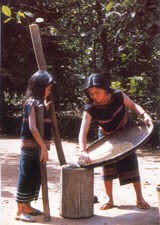
Photo Source:
Copyrighted © 2026
Asia Harvest All rights reserved. Used with permission |
Send Joshua Project a map of this people group.
|
| People Name: | Roglai, Cacgia |
| Country: | Vietnam |
| 10/40 Window: | Yes |
| Population: | 3,700 |
| World Population: | 3,700 |
| Primary Language: | Roglai, Cacgia |
| Primary Religion: | Ethnic Religions |
| Christian Adherents: | 29.00 % |
| Evangelicals: | 12.00 % |
| Scripture: | Translation Started |
| Ministry Resources: | No |
| Jesus Film: | No |
| Audio Recordings: | No |
| People Cluster: | Cham |
| Affinity Bloc: | Southeast Asian Peoples |
| Progress Level: |

|
Introduction / History
The ethnic population of the Cacgia people group primarily resides in an exclusive centralized pocket within the southeastern Vietnamese provinces of Quang Binh and Ha Tinh. More commonly referenced as the Ch?t people group, the Cagcia are also referred to as the Cagcia Roglai, as the Cacgia remain a subgroup of the larger Roglai ethnic community. "Chut" references the caves and rock dwellings where the tribes previously resided, with some members can still be found. A village father, referred to as Pucaven, offers wisdom from the past and inspiration for the future, as the Cacgia people group thrive in tribal communities. With Ho Chi Minh City distantly to the West, Dalat is the closest city to the main location of the Cacgia people group. Still, the Cacgia people group are known to thrive in autonomy apart from the greater Vietnamese society.
What Are Their Lives Like?
The Cacgia people group speak Roglai and Chut, as well as other regional dialects. Some members also speak Vietnamese and Mandarin, especially those who complete commercial trading with outside people groups. For the minority population still living in caves, the Cacgia people group live off the land to maintain their livelihood. It is more common nowadays to find the Cacgia people group members living in their own constructed stilt-houses with bamboo. Whether calling home in caves or in village settings, the Cacgia people group are classified as hunters and gatherers. The Cacgia construct crossbows, as well as train dogs, to assist their efforts of hunting smaller animals, as well as gathering fruit and fungi. Farming remains the primary profession among the Cacgia people group. The collective group actively cultivates, plants, and prunes rice, corn, beans, gourds, and tobacco each season year-round. The Cacgia people also raise and herd water buffalo, chicken, ducks, and pigs. Notoriety among the Cacgia people group arises from their contributions to Vietnamese music, as their uniquely-crafted gongs and lip harp have been featured in regional and national competitions, even helping some Cacgia competitors to win.
What Are Their Beliefs?
The Cacgia people group initially followed animism, with shamans previously providing the main spiritual discipline and guidance for the villagers' understanding of and reverence for the spiritual realm. The Cacgia's "Village Elders' Council" led consistent spiritual conversations and practices to keep villagers informed. Some of the Cacgia shamans' unique practices include idol worship of animal spirituality, so the tribe could avoid the plague of omens and instead receive blessings.
In recent years, God has moved from the efforts of Christian missionaries, both international and Vietnamese, who revealed the gospel truths that exhibited healthy reverence for wildlife by caring for them and no longer worshipping them. Gospel acceptance within the Cacgia people group has led to a decline of animistic worship, as Cacgia believers now corporately worship God the Father of all creation.
What Are Their Needs?
The unbelieving Cacgia people population desperately needs the message and truth of Jesus' love. Whether Christian or not yet Christian believers, both members of the Cacgia people group face the same dilemma with current Vietnamese modernization. The Cacgia people group's isolation hinders their development to contribute to Vietnamese culture. Where proactive engagement with other groups would benefit the Cacgia, the Cacgia remain at a disadvantage for missing resources and advocating for themselves for their land preservation and ways of life. The understandable fear of assimilation remains a stumbling block for some within the Cacgia people group, as those dwelling still in caves lack ability to receive consistent food, quality education, life-saving medicine, and business opportunities. Thus, poverty and illiteracy still plague some members of the Cacgia people group who remain separate either unknowingly or unwillingly.
Prayer Points
Pray for God to continue providing guidance and inspiration for the Cacgia Christians as they rely on God the Creator and continue serving Him faithfully with sharing the gospel truths.
Ask God to build up established Cacgia church communities, so their lifestyles become attract for searching yet-to-believe individuals whose softened hearts lead them to accept Jesus as their Savior.
Intercede that God would stir new callings and visions among the Cacgia people group members to willingly share the gospel among neighboring people groups. The Cacgia have a unique opportunity to utilize language comprehension and cultural understanding to help reach more of the greater Roglai ethnic group.
Request for God to remind the Cacgia people that their testimonies matter to their yet-to-believe neighbors as well as the global Christian community.